

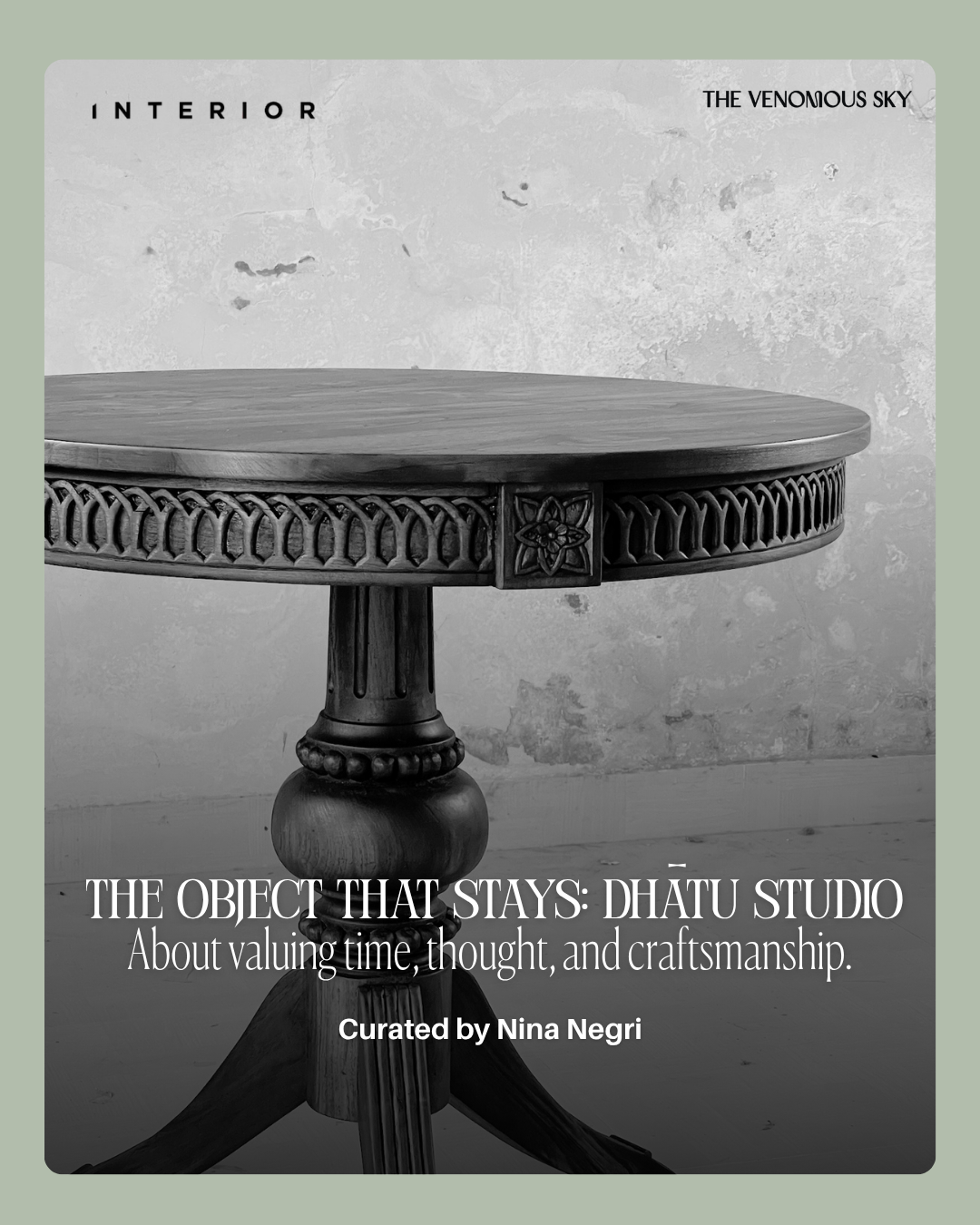
The Object That Stays
There is a particular kind of object that doesn’t need to announce itself. It isn’t defined by novelty or designed around a passing trend. It becomes part of the rhythm of a space through the simple fact that it continues to do its job exceptionally well. These are the pieces that move from one house to the next, gather stories, and become more meaningful with each passing year.
In an industry increasingly defined by speed, disposability, and the promise of the next thing, dhātu builds in the opposite direction. Founded by Gautam Shapiro, dhātu is a studio that makes furniture the way it used to be made: with time, intention, and the confidence that a well-crafted object needs no replacement.
About Design
For dhātu to be truly “design-led” doesn’t require an abstract answer. Every project begins with the client, their needs, the space the piece will occupy, how it will be used, and the constraints that shape it. Nothing is offered ready-made. Each piece starts at the drawing board, where proportions, materials, and construction are worked through until the result is exactly right.
But design doesn’t operate in isolation from craft. Years spent working with materials, joinery, and technique inform the decisions made on paper. The studio describes this as a cycle, not a hierarchy: design guiding the work, and the work, in turn, shaping the design.


“We don’t simply offer ready-made products. Each piece starts from the drawing board, where we refine proportions, materials, details, and construction to ensure it’s the right fit for the client and their space.
In that sense, design leads the hand. But the hand also informs the design.” – Gautam Sapiro
Process
A slow process sounds appealing in theory. In practice, it has a cost. Most potential clients today work within timelines that don’t easily accommodate precise handcraft. It’s a pattern the studio has seen before, contractors promising fast turnarounds to keep clients happy, even when those timelines aren’t realistic for the kind of work dhātu does.
“Quality craftsmanship takes time. Every piece needs the attention it deserves if it’s going to last for generations. The clients who choose to work with us understand that they’re investing in longevity, not just a quick delivery, and they’re willing to give us the time needed to achieve that standard.” – Gautam Sapiro
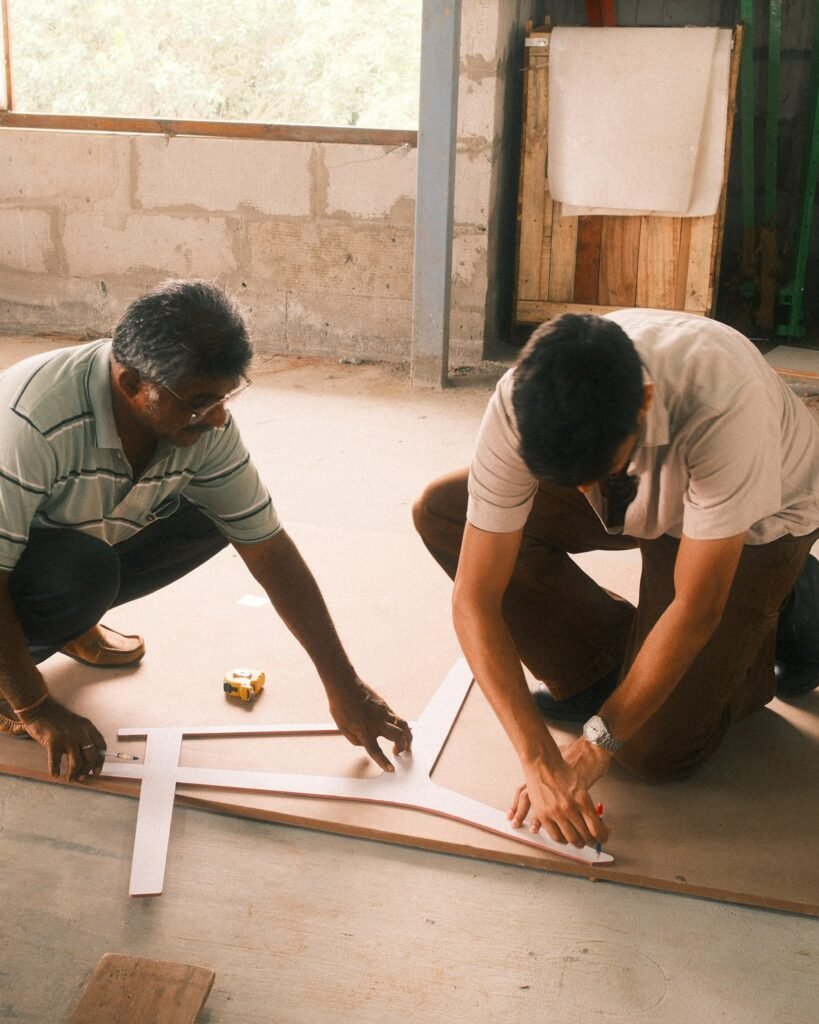
That doesn’t mean rigidity. When budgets or deadlines are tighter, the studio adapts by simplifying the design itself – a more direct piece that can be made efficiently without compromising on quality.
Collaboration
Working within someone else’s vision could easily be read as a limitation. dhātu doesn’t see it that way .
“When a project allows for open-ended exploration, we embrace it. Those opportunities are incredibly rewarding because they give us the freedom to experiment, refine ideas, and push our creative thinking.” – Gautam Sapiro
But most of the work is the opposite: bringing a client’s vision to life within the constraints of space, budget, function, or aesthetic.
“At the end of the day, our greatest satisfaction comes from creating something that feels exactly right for the people who will live with it. Seeing a client’s vision become a beautifully crafted reality is what we enjoy most.” – Gautam Sapiro
Team and work
At dhātu, the craftspeople are given time and space to attend to detail and take pride in what they make, where their skill isn’t compressed by a system that forces artists to condense their craft into impossibly short deadlines shaped by the expectations of mass production.
“When people aren’t treated like machines, they naturally become more invested in what they’re making, and the quality reflects that.” – Gautam Sapiro


What stays
When asked what they hope someone will feel twenty years from now, living with a piece made by dhātu, the answer is functionality.
“I want them to feel that it’s just as relevant and functional twenty years later as it was the day it arrived. We want to create pieces that age gracefully, gather stories, and continue serving their purpose for decades.” – Gautam Sapiro
The true measure of success, on dhātu’s own terms, is not a client eventually replacing the piece, it’s a client eventually passing it on. If something made today can be used for the rest of someone’s life and then handed down to the next generation, the studio considers the work done.


dhātu is still in its early chapters but the intention behind every piece is already fully formed.
In a world that keeps asking us to want more, faster, dhātu is making the case for less, better, and built to last. And if a piece made today ends up in someone else’s hands a generation from now – that’s the whole point.