
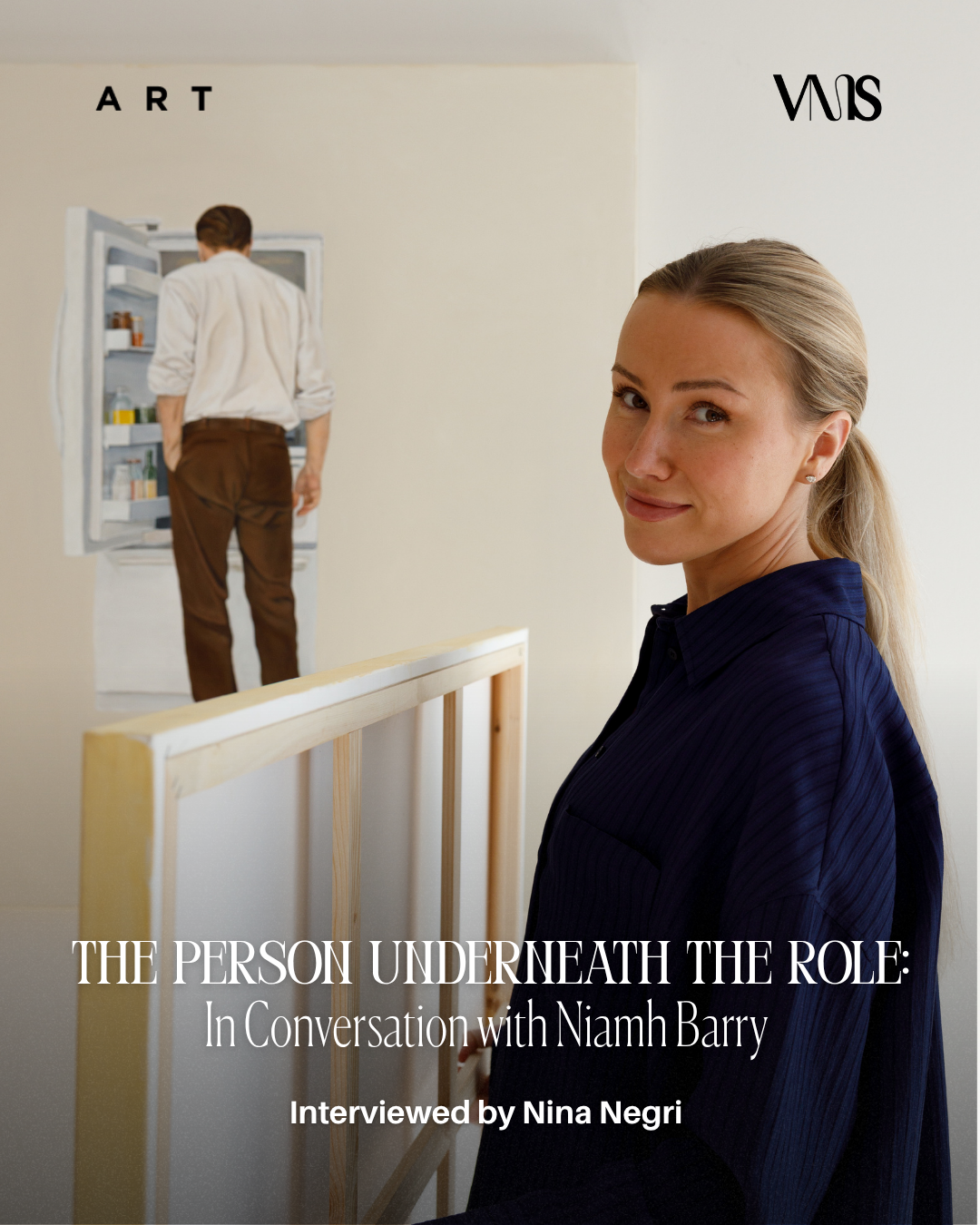
What do you feel behind your role? Niamh Barry spent seven years watching it happen before she started painting it.
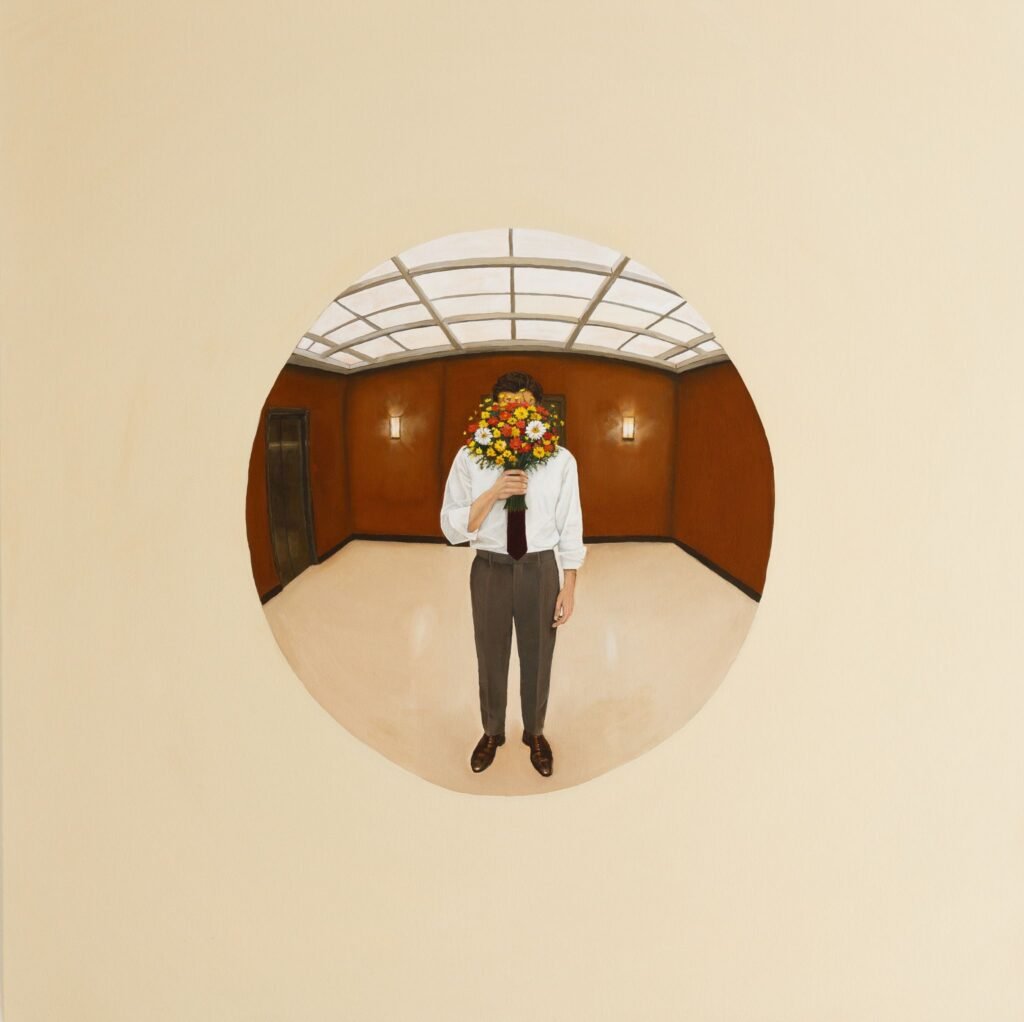
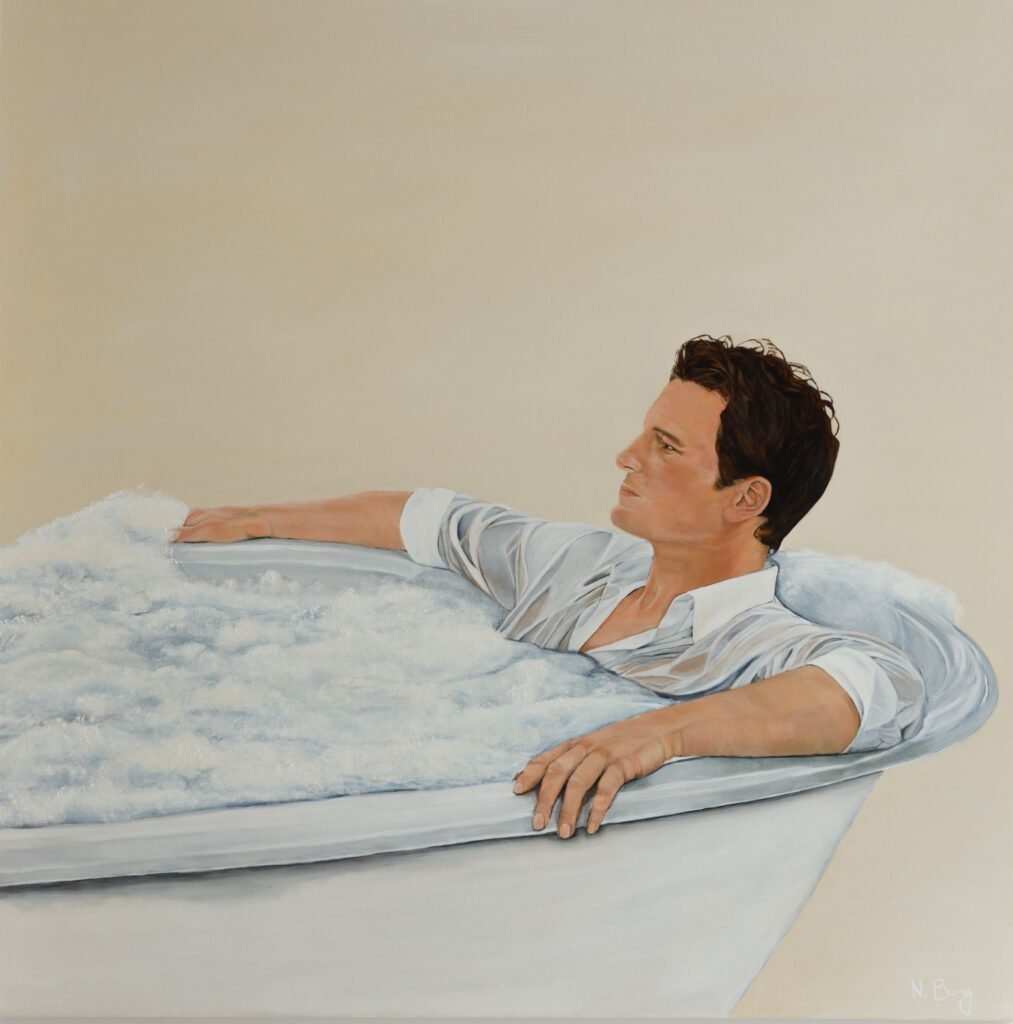
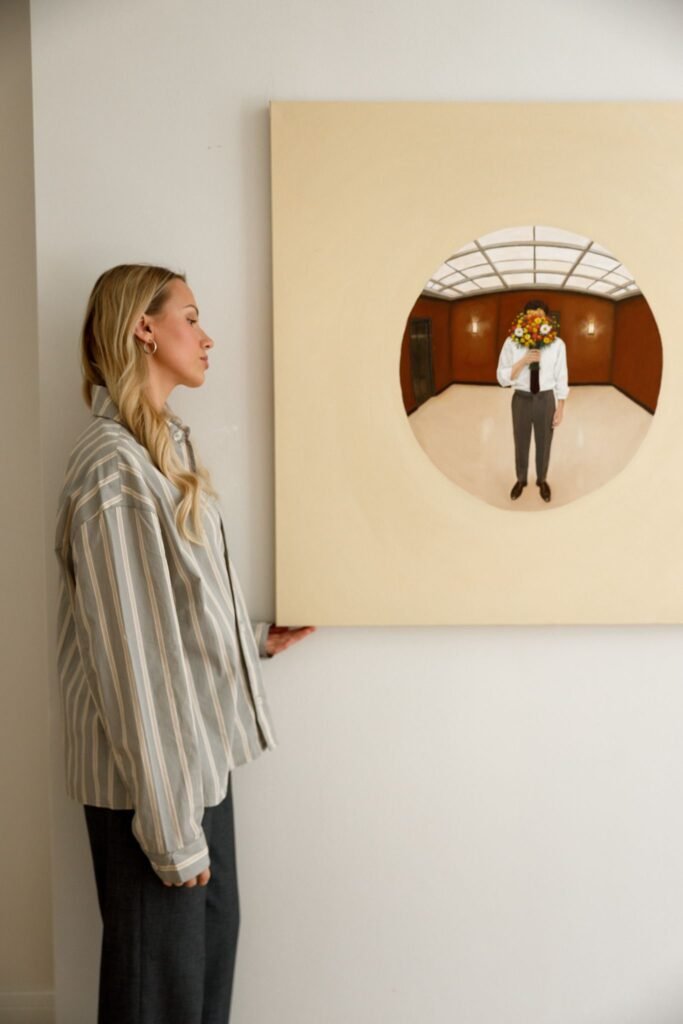
Niamh Barry, a painter based in London, worked on the investment team of a major American growth capital fund before dedicating herself fully to painting. Working in oil on canvas, her paintings have become recognizable for their depiction of the corporate world and inner withdrawal.
Contrary to what one might expect, Barry doesn’t place herself within the well-worn narrative of fleeing a soulless industry for a more creative one. She pushes back immediately. “It wasn’t a dramatic turning point. I genuinely enjoyed my career. I learned an enormous amount and worked with brilliant people.”
What drove Barry was the development of a taste for attention and observation that became hard to ignore. She found herself unable to stop thinking about painting, and more specifically, about what she had been quietly absorbing for years within that world:
“I wanted to explore creatively. I had spent seven years immersed in a very particular environment, watching how ambition shapes people, how routines become rituals, and how work can begin to influence our sense of identity. I became increasingly fascinated by those observations, and painting felt like the best way to explore them.” – Niamh Barry
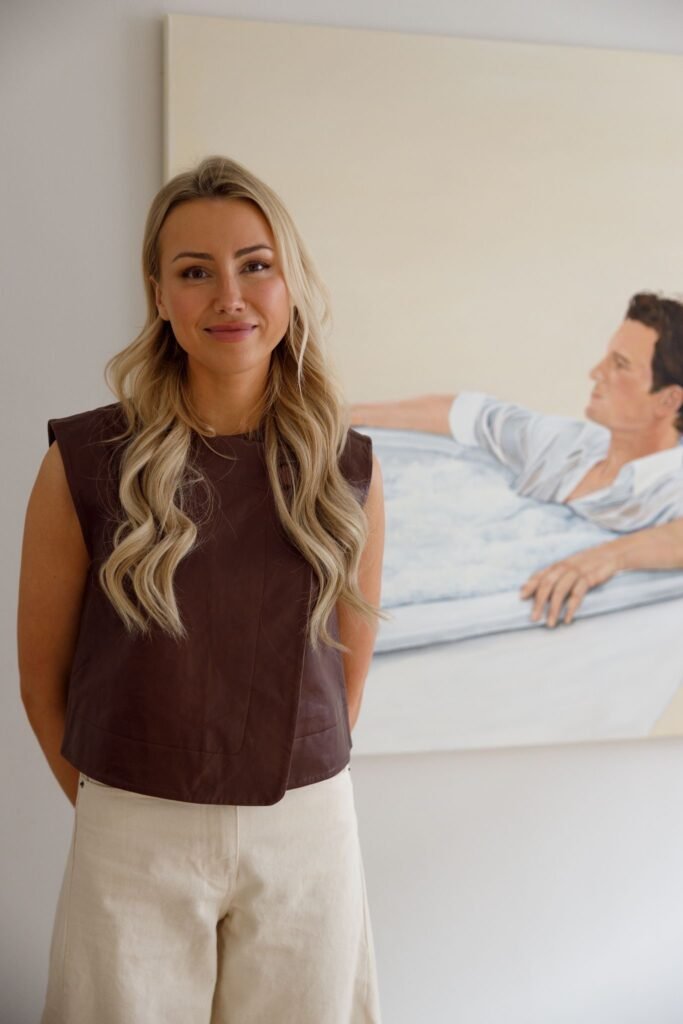
Barry is careful to clarify that her practice isn’t criticism disguised as art. “I have a lot of respect for that world. I was part of it, and I loved its intellectual energy.”
What interests her instead is what that world tends to overlook: it’s human side.
“People are ambitious and competitive, but they’re also bored and hopeful. They’re waiting for coffee, staring out the window, taking the long way back from lunch, or enjoying five minutes where nobody needs anything from them. The paintings aren’t really about corporate life, they’re about the person underneath the role.”
None of Barry’s figures are portraits in the traditional sense. “Most of the figures are composed of fragments of observation, memory, and imagination.” Barry says, is a direct inheritance from her former job, and yet the work is not without the artist’s own presence. Barry has lived in the rooms she paints:
“Most of the figures are assembled from fragments of observation, memory and imagination. Spending seven years in offices gave me a huge visual vocabulary; I’ve lived those routines myself. I deliberately keep the figures anonymous because I want viewers to see themselves in them rather than wondering who the individual is.”
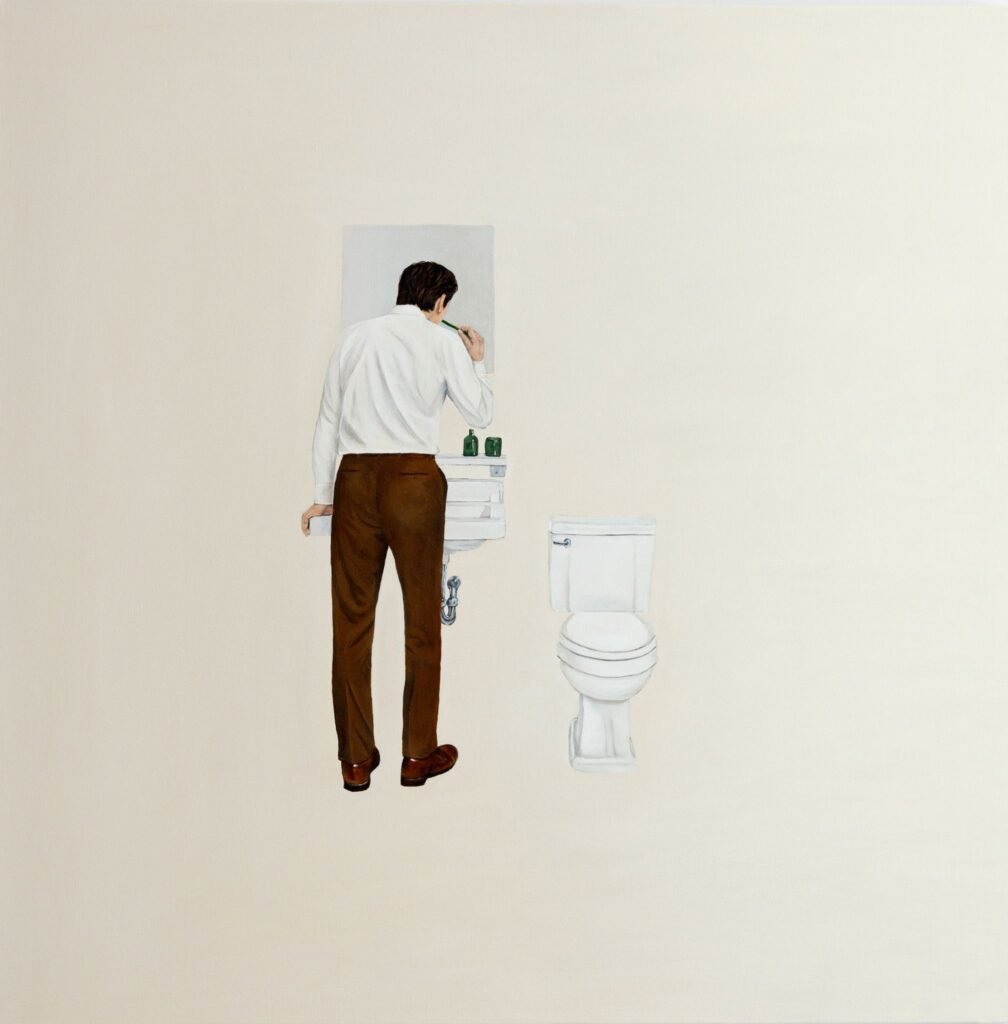
The anonymity is intentional, and it functions less as concealment than as an open door. “I keep the figures anonymous on purpose because I want viewers to see themselves in them, rather than wondering who the individual is.”
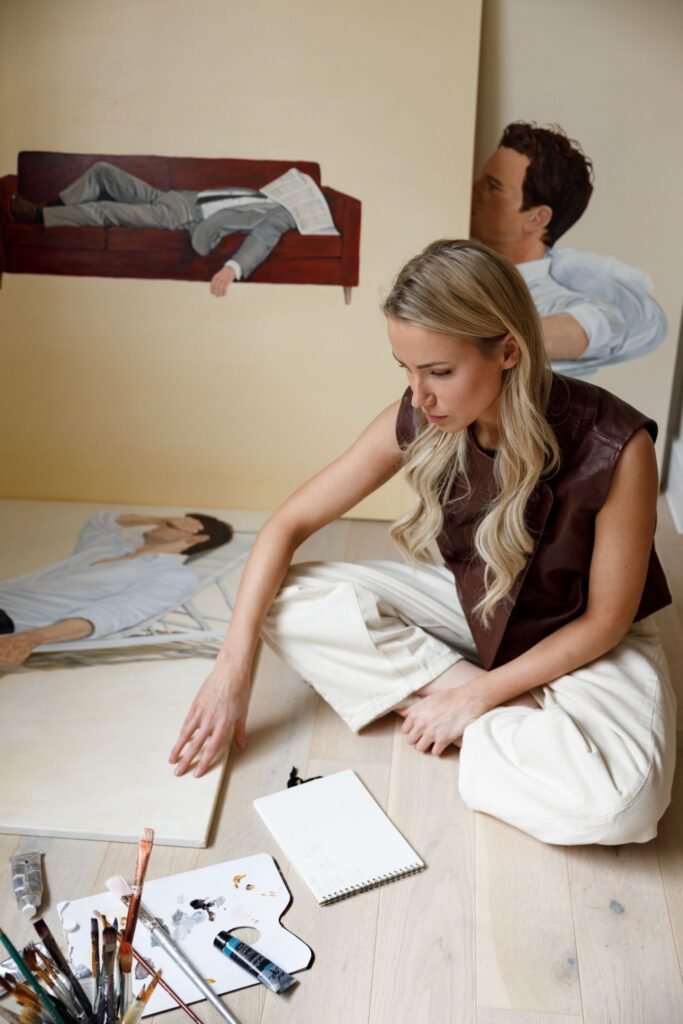
Barry considers her technique – oil on canvas – essential to the emotional record. She begins the process with an acrylic composition, then moves to oil. “Oil lets me build up color slowly and create a depth that I don’t think acrylic can achieve.” she says.
Asked about the early stages of her career as a painter, Barry says she isn’t troubled by pressure to achieve visibility.
“I’m interested in making work that continues asking questions over many years rather than trying to define myself with a single successful painting.”
In her view, visibility is a consequence, not a goal.
When asked what she wants a viewer to feel when contemplating one of her paintings, Barry returns to the idea that guides her entire body of work: the gap between the role we play and the person we really are.
“Most of us spend a large part of our lives following routines, meeting responsibilities, and carrying expectations that aren’t always visible to the people around us.”
She elaborates: “All of us have moments when our mind wanders, when we feel unexpectedly alone in a crowded room, when we carry financial or emotional burdens that no one else can see, or when we catch ourselves imagining a different version of our lives.”
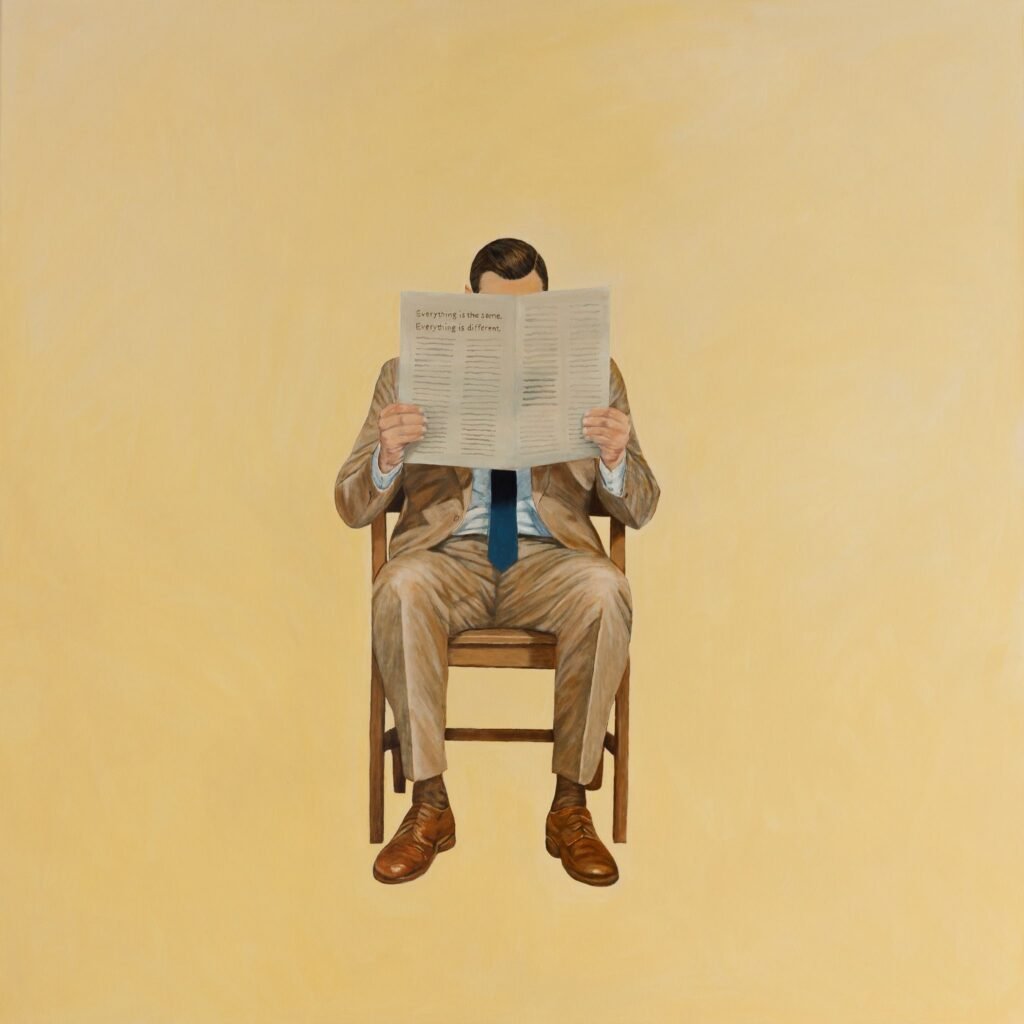
For Barry this is evidence of an inner life that never fully disappears, no matter how convincing the performance.
“I hope the paintings remind people that there’s a rich inner life behind the roles we all play,” she says. If a viewer walks away with a flicker of recognition: “I’ve felt that before” or simply looks at the people around them with a little more curiosity, Barry considers the work done.
Niamh Barry is represented by Art of NOMA, in London. Whose work is already included in contemporary group exhibitions and summer shows (such as “The Summer Show”) organized by independent curators on digital platforms and in spaces like Oreofe Art Gallery and Artsy.
Inquiries:
Email – niamh.r.barry@gmail.com
or
DM – niamh__barry