
SEPT Fragrances; Inside the Fine Fragrance House Between New Delhi and Paris
1. What has building SEPT taught you about trusting your own point of view, even when it goes against convention?
Building Sept has taught me a lot about unlearning what I thought I knew about work. Entrepreneurship can be quite a solitary journey at times, and so much of it is learning new skills, relearning old ones, and becoming comfortable with not always knowing the answer or having everything go right. As a perfectionist, that instinct to want everything to be exactly right is something I’ve had to learn to loosen my grip on. I think a lot of us struggle with that.
But probably the biggest lesson has been learning that having a point of view, and the conviction to stand behind it, is the point.
Sept really came from wanting to create the fragrance house I couldn’t find on a shelf: something culturally rooted, but contemporary, playful and globally relevant. There have been so many moments when it would have been easier to follow what already works, whether that meant leaning into familiar ideas of what a fragrance brand from India should look or smell like, following the visual codes already established in the category, chasing whatever is currently trending in niche fragrance, or simply white-labelling ready-made scents and putting them on a shelf.
What I’ve learned is that the things we feel most strongly about are usually the things worth protecting, even when that makes the journey longer and less linear. Not every choice will resonate with everyone, and I think that’s part of building something with a real point of view. Different people will connect with different parts of the brand. The aim was never to make something that appeals to everyone, but to create something specific enough to really mean something to the people it does connect with.
There’s a certain light-hearted rebellion at the heart of Sept. A willingness to do things a little differently without taking ourselves too seriously. A little unexpected, but always considered.
2. As a founder, how do you balance the instinct to protect your creative vision with the realities of building a commercially successful business?
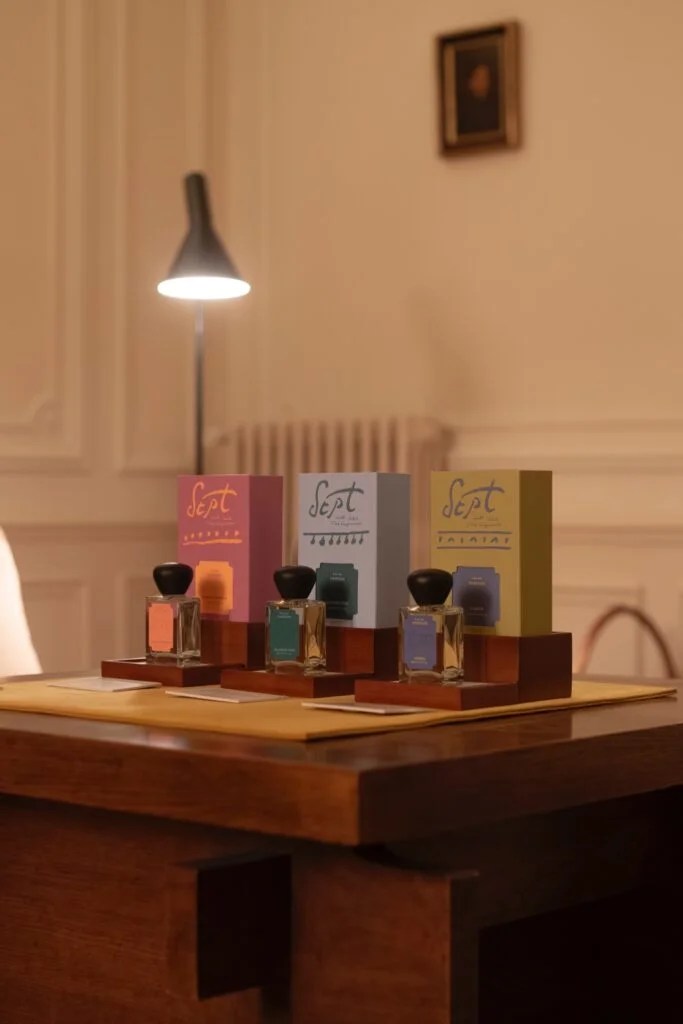
I think about this constantly because Sept is both incredibly personal to me and, of course, a business that needs to grow.
For me, commercial thinking doesn’t have to mean diluting the creative idea. Sometimes it actually forces you to make it clearer and to the point. I can be obsessive about the imagery, the fragrance, the packaging, the words we use, even the smallest details, but I’m also learning to balance that with the realities of building a business. Starting something from scratch requires a certain amount of hustling and figuring things out as you go. If you can do something yourself, instead of leaning on another creative, sometimes you do. But I think an equally important part of building a brand is learning where to let go, where to embrace new ideas, and also where you simply can’t compromise. Being able to communicate those boundaries clearly is something I think a lot of brands, including us, have to get better at, especially as you grow or launch. It’s about understanding which priorities are genuinely fundamental to the brand.
For Sept, I think one of those priorities is creating an experiential connection with the customer. I want someone to come to us because they’re excited by the scent, the imagery, the story around it, and ultimately by how it makes them feel. Of course, things like being conscious, vegan and cruelty-free, and how long-lasting a scent is, do matter, and they are part of how we operate, but I don’t want those labels to be the reason someone falls in love with Sept. They should support the experience, rather than become the entire proposition.
3. How important was it for you to build a strong visual language, and what did you want people to feel when they encountered the brand?
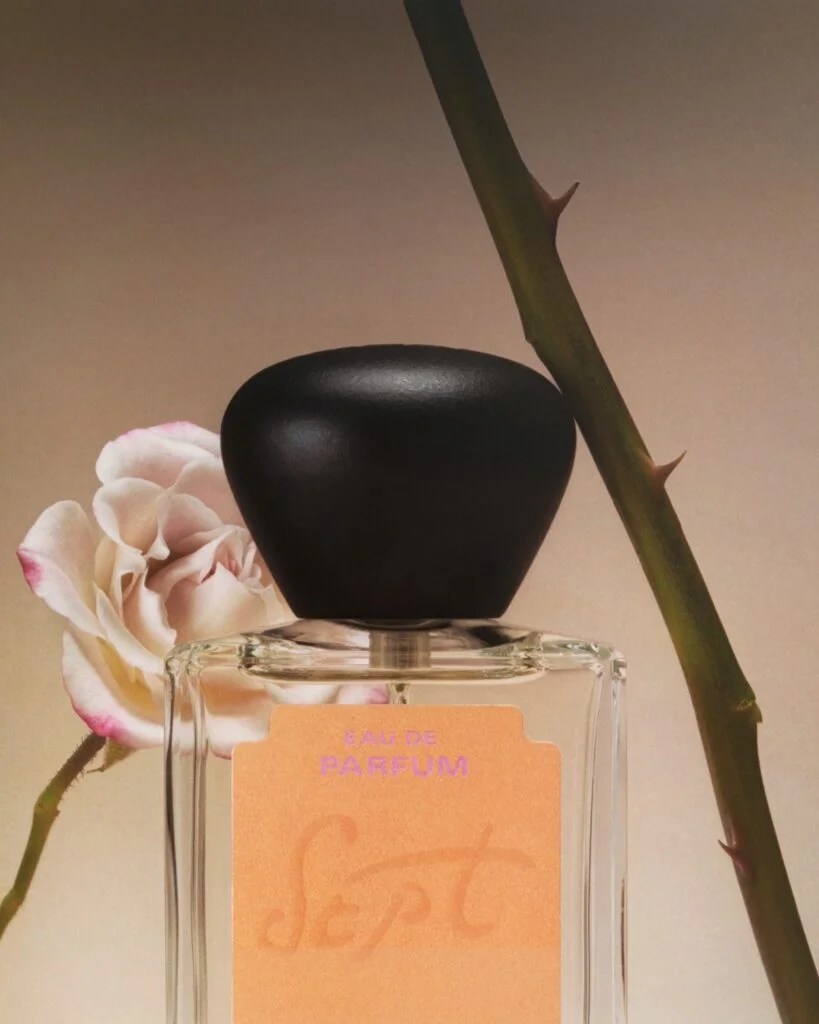
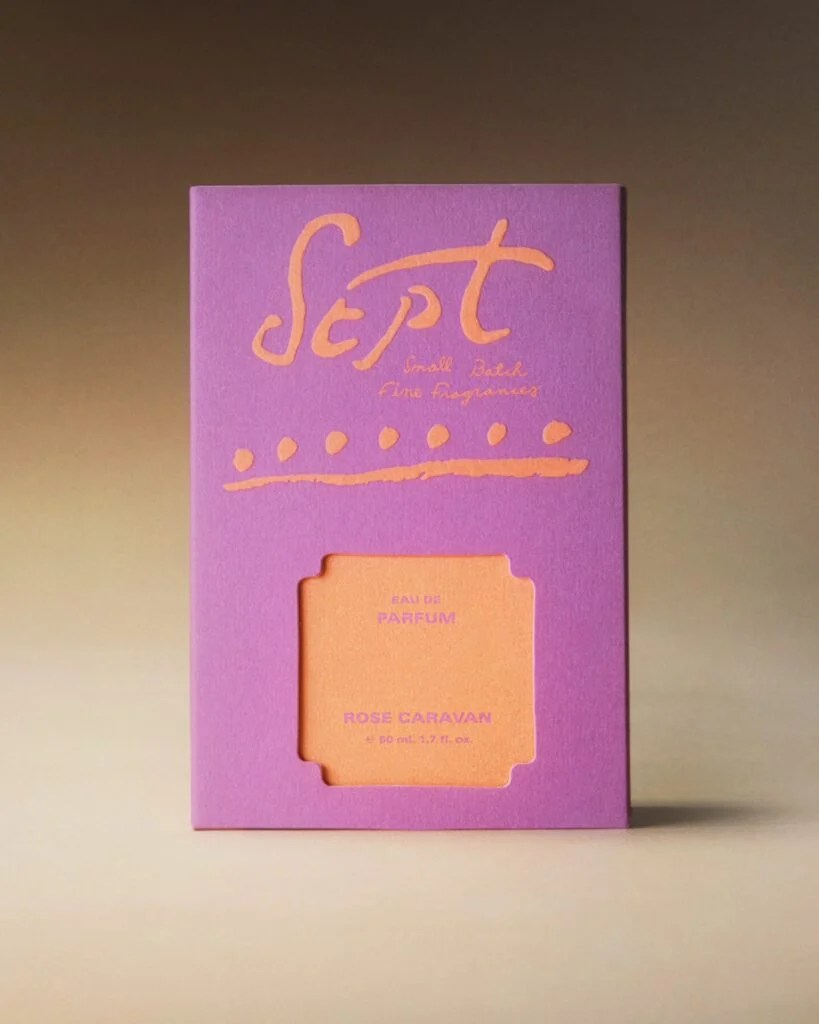
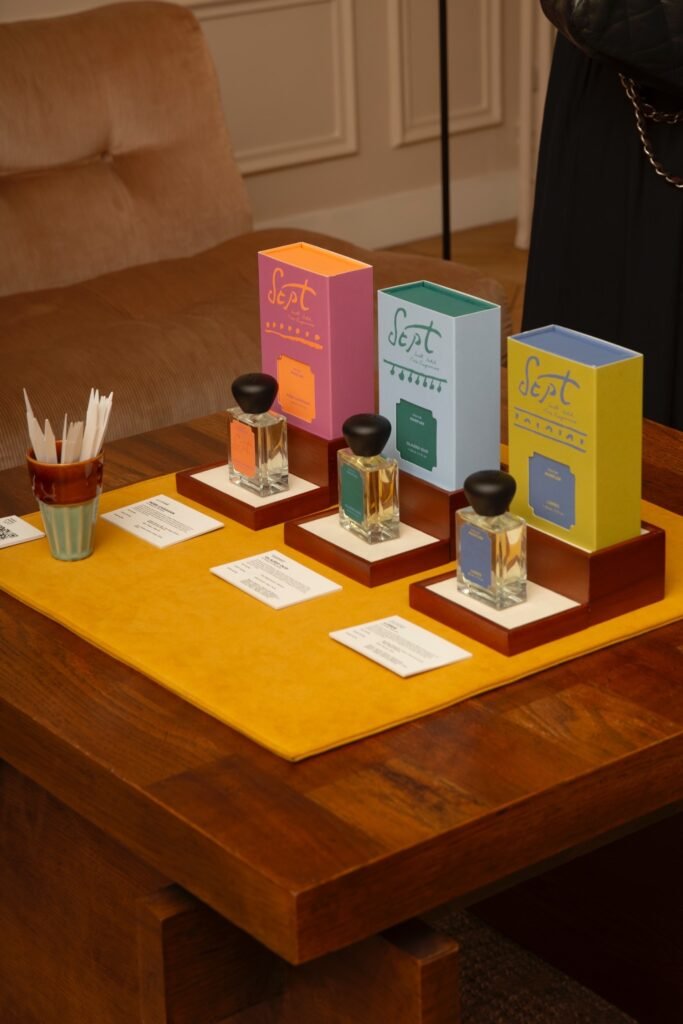
Extremely important. I come from a design background and education, so having a strong visual language felt quite instinctive to me. I never wanted that to stop at the bottle either. It had to extend across every customer touchpoint. Our friends joke that the brand is “very Parsons,” which is probably fair.
Fragrance is such a sensorial experience, and you can’t fully experience scent through a screen, so everything surrounding it becomes part of how someone first enters the world of the brand.
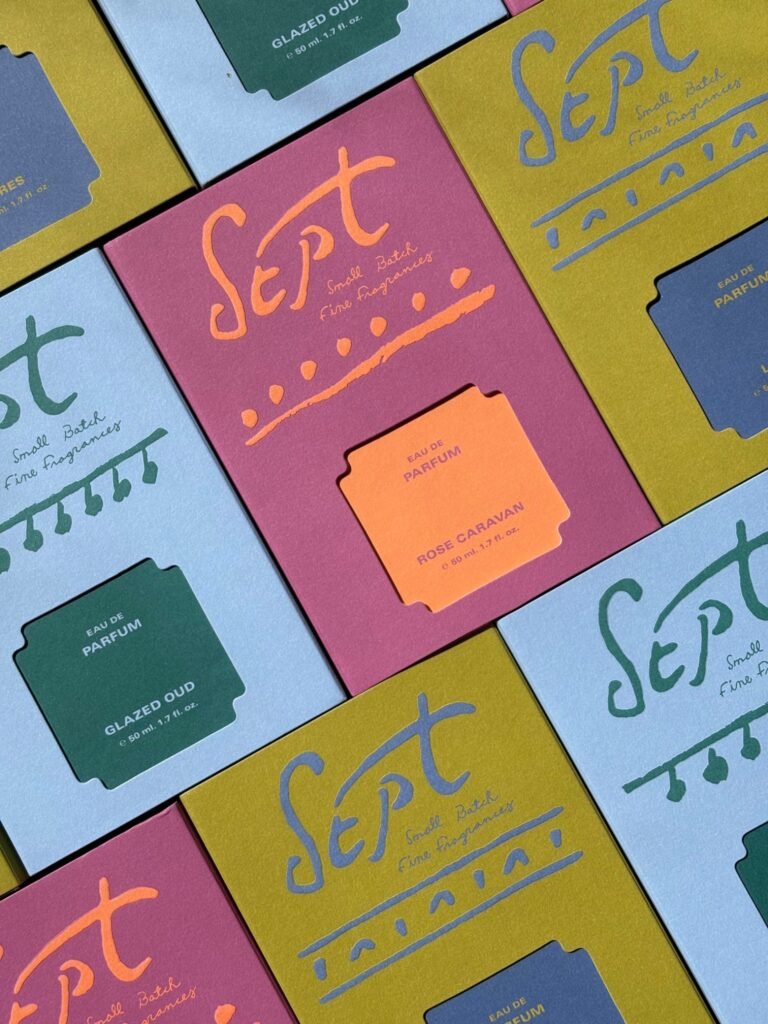
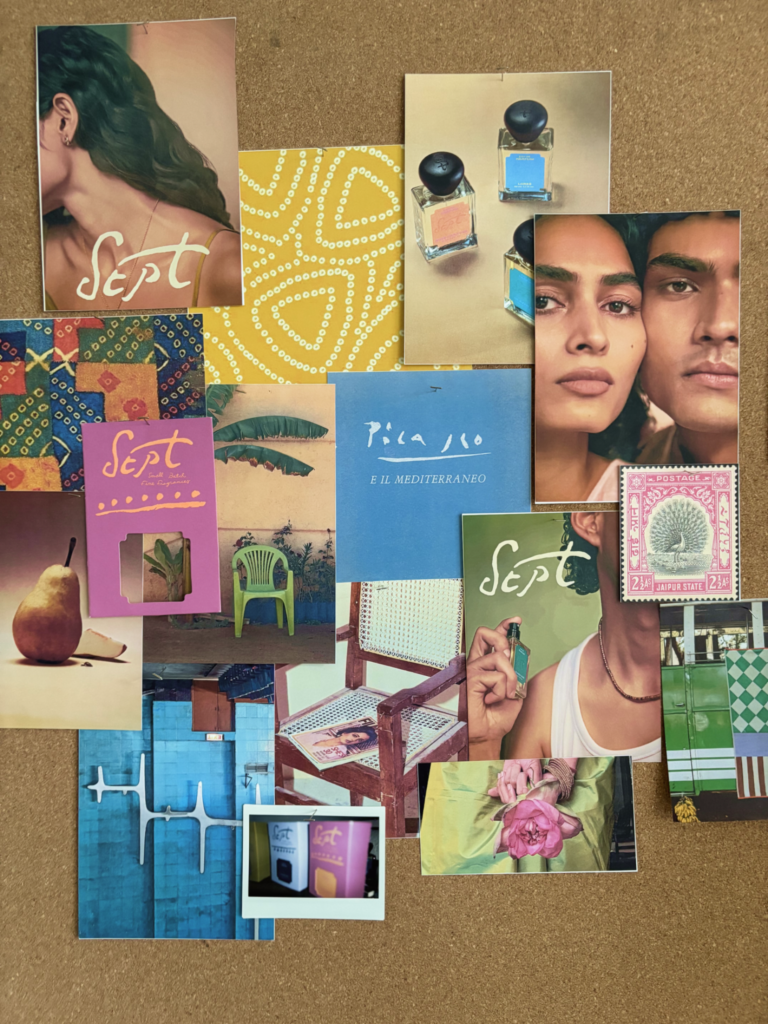
The visual world of Sept came from a collection of references I’ve carried with me for years: travel, films, paintings, places, objects, interiors, colours and memories. Rather than beginning with a conventional idea of what a perfume brand should look like, we built a world around those references and allowed the identity to grow from there. And of course, taking references from cultures that the brand traverses.
With Sept, I wanted that visual language to feel considered without ever becoming too serious. There’s modernism, Mediterranean warmth, references to Indian visual culture, colour and pattern, and a certain playfulness running through it, but none of it is meant to feel overly literal. I wanted someone to encounter the brand and feel curious first, to sense that there is a whole world behind the bottle.
4. SEPT sits at the intersection of India and France, tradition and modernity. How have your cross-cultural experiences shaped the brand?
Sept really reflects the places and experiences that have shaped me. I was born in Thailand, raised in India, and have lived and worked in Paris and New York, so I’ve never experienced culture as something completely fixed or belonging to one place.
New Delhi is home, and Paris is particularly important to the story of Sept. The name itself comes from sept, seven in French, and from a period of my life in Paris’s 7th arrondissement (Saint Germain), when I first started developing a real interest in the world of niche fragrance. Today, the fragrances are imagined in India, developed collaboratively with independent perfumers in France, and produced in Grasse.
But I don’t really see Sept as a neat meeting of two countries. It carries fragments of many places, memories and ideas, some deeply personal and others much more universal. The point was to honour our South Asian perspective while adding another idea of what a contemporary fragrance brand coming from India could look, smell and feel like. At the same time, I want to leave enough space for the wearer to bring their own memories, associations and interpretation to it.
5. In an industry where fragrance brands can easily fall into familiar visual and cultural tropes, what were you determined not to do with SEPT?
I was very conscious of not building Sept around an expected version of what an Indian fragrance house should look or feel like. South Asia has such an extraordinary relationship with scent, but that richness can sometimes get reduced to a fairly narrow visual and material vocabulary, or filtered through a certain kind of exoticisation. Those references can be beautiful, but they aren’t the only way an Indian point of view can exist in fragrance.
I didn’t want the brand to have to perform its roots. I wanted those references to come through naturally and authentically, through certain ingredients, memories, visual cues, cultural references and the way we tell stories. At the same time, I didn’t want Sept to become another sterile, anonymous version of contemporary niche luxury either. The aim was always to create a fragrance house with its own perspective: culturally grounded, globally curious, a little playful and a little unexpected.

6. What do you think is the biggest misconception about building a modern fragrance brand, and what has SEPT done differently?
I think from the outside it can look quite simple: you create a beautiful perfume, put it in a beautiful bottle and build a brand around it. In reality, particularly if you care deeply about the details, it becomes an enormous ecosystem.
We spent years developing Sept. The fragrances were composed from original briefs with independent perfumers in Paris, rather than selected from an existing catalogue or developed by asking a lab to recreate something that already existed. That same level of thought went into the notes, packaging, typography, imagery and, eventually, the way someone experiences the brand. There is a human hand, conversation and interpretation behind every part of it. Every decision was made with the ambition of creating something that could stand alongside the best fragrance houses in the world in terms of quality and craft, while still having a perspective that felt distinctly our own.
6. What do you think is the biggest misconception about building a modern fragrance brand, and what has SEPT done differently?
I think from the outside it can look quite simple: you create a beautiful perfume, put it in a beautiful bottle and build a brand around it. In reality, particularly if you care deeply about the details, it becomes an enormous ecosystem.
We spent years developing Sept. The fragrances were composed from original briefs with independent perfumers in Paris, rather than selected from an existing catalogue or developed by asking a lab to recreate something that already existed. That same level of thought went into the notes, packaging, typography, imagery and, eventually, the way someone experiences the brand. There is a human hand, conversation and interpretation behind every part of it. Every decision was made with the ambition of creating something that could stand alongside the best fragrance houses in the world in terms of quality and craft, while still having a perspective that felt distinctly our own.
7. What’s next for SEPT? As the brand continues to grow, what are you most excited to build, explore or redefine in its next chapter?
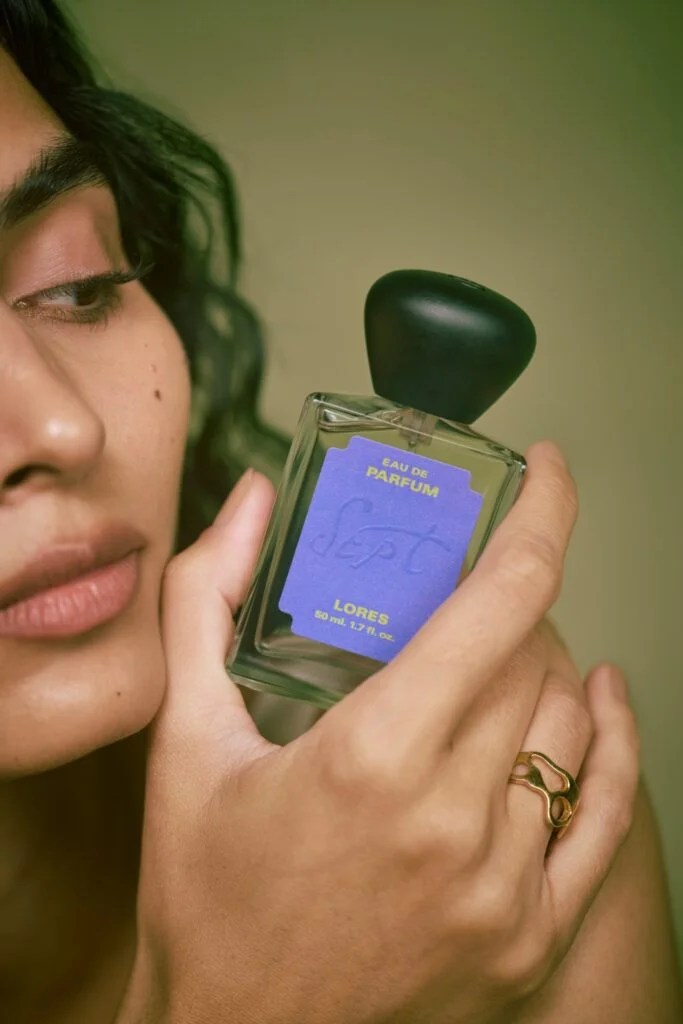
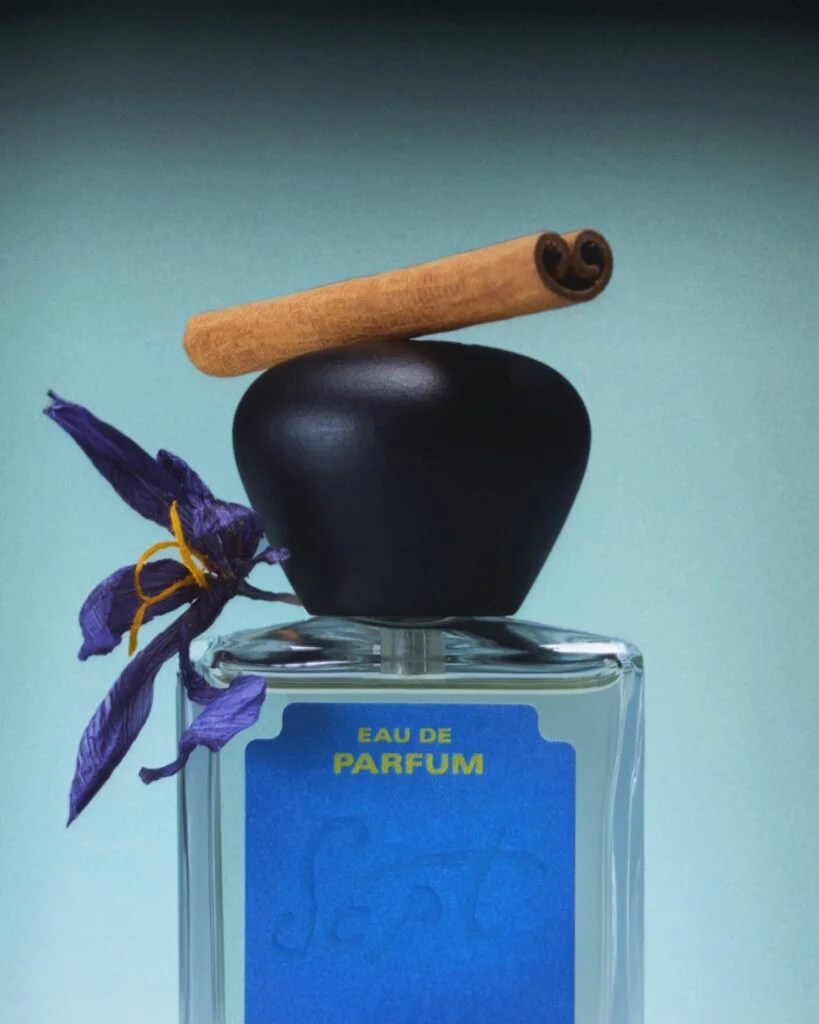
Volume One really feels like the beginning of a much larger chapter for Sept. There are many more fragrances we’re already developing, and I’m equally interested in what happens when the brand moves beyond perfume on skin and into other scent-led objects and rituals around space. For example, we are in the process of developing our range of Candles. Perfume is our first expression, but scent is really the medium through which I want Sept to keep telling stories. That opens up a much broader world for us creatively. I’m also excited about growing Sept globally alongside India, but in a thoughtful way. For me, that means working with the right stockists, collaborators and creative communities rather than trying to be everywhere immediately. I’d rather build slowly with people who genuinely connect with the brand.
Ultimately, I want Sept to contribute to a broader idea of what a contemporary fragrance house from India can be: culturally grounded, globally relevant, and confident enough in where it comes from to keep evolving beyond expectation.