
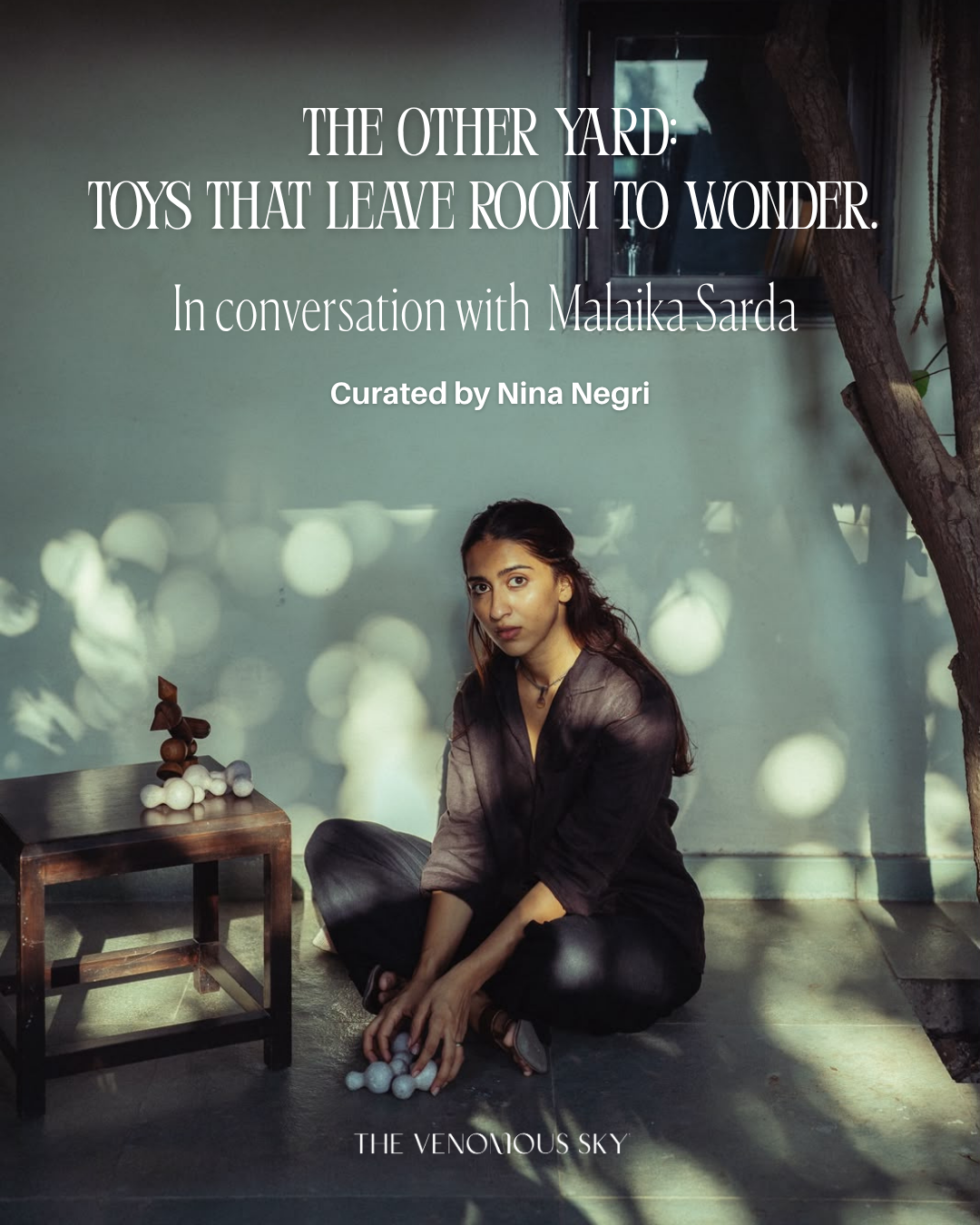
The Other Yard is a design studio in Surat, India, that makes toys with and for children. Its founder spends time with the children of Panas Gaam and takes prototypes back to them for feedback. In this conversation, we talk about materials, motivation, community, distribution and the Gujarati phrase that gave the studio its second name.
1. Are the products made from recycled materials? If so, where do you source them from?
Our products aren’t necessarily made from recycled materials, but we try to work largely with renewable and biodegradable materials such as wood, paper-mâché and natural fibres wherever possible. We have always been mindful of the fact that designing a new object also means putting another thing into the world, so the materials, product longevity and how something is made are important parts of the process. We aren’t a 100% sustainable practice yet, but we keep trying to make more responsible choices with every product.
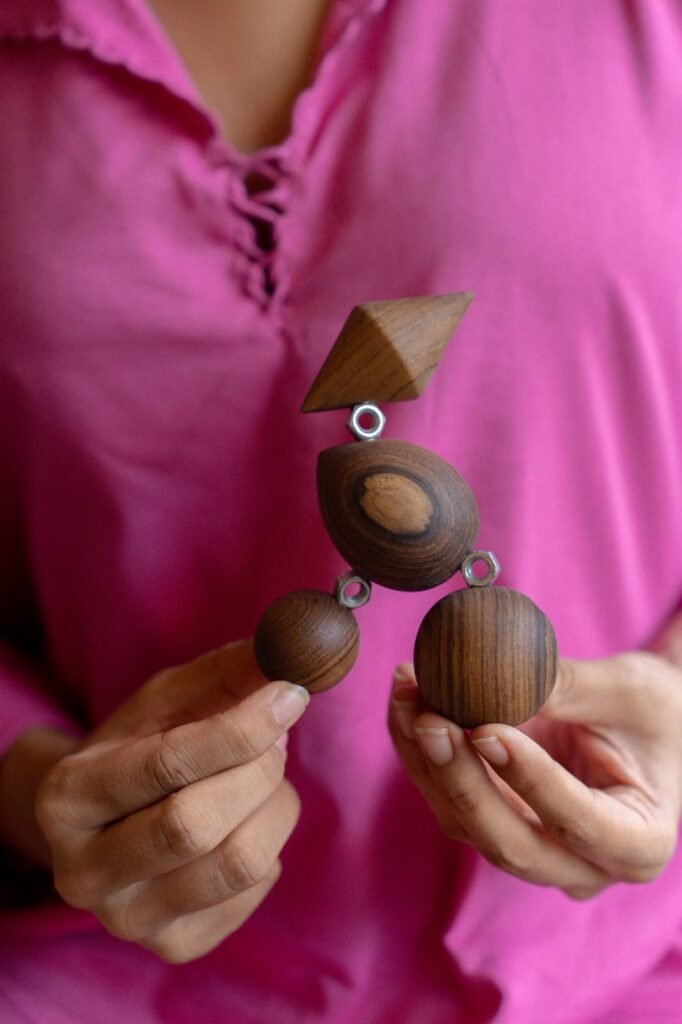
2.What are the “blobs” priced at?
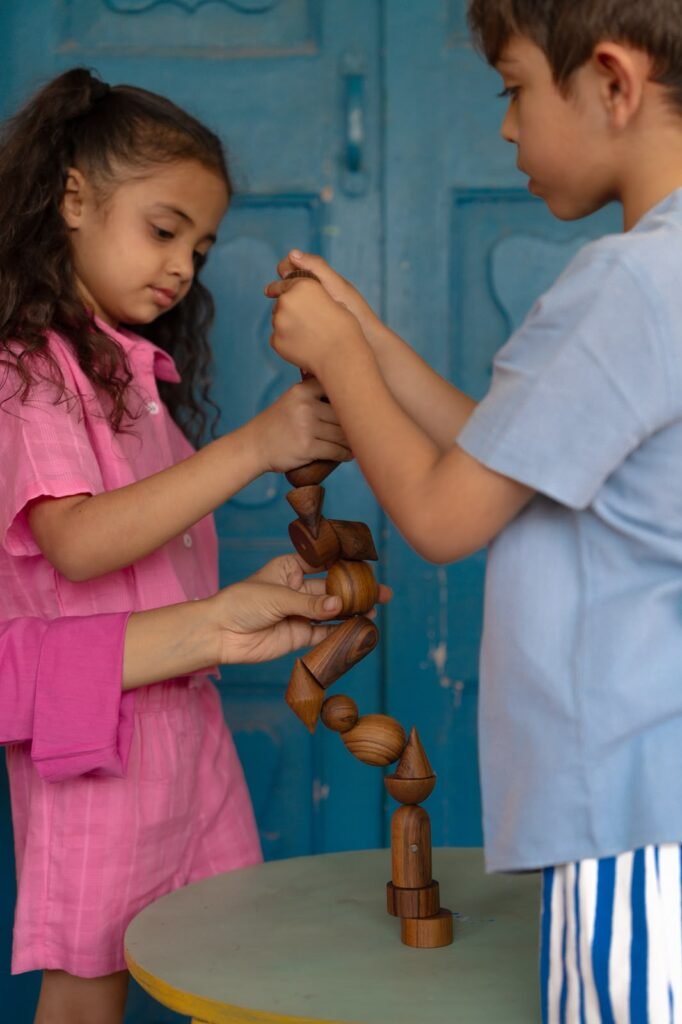
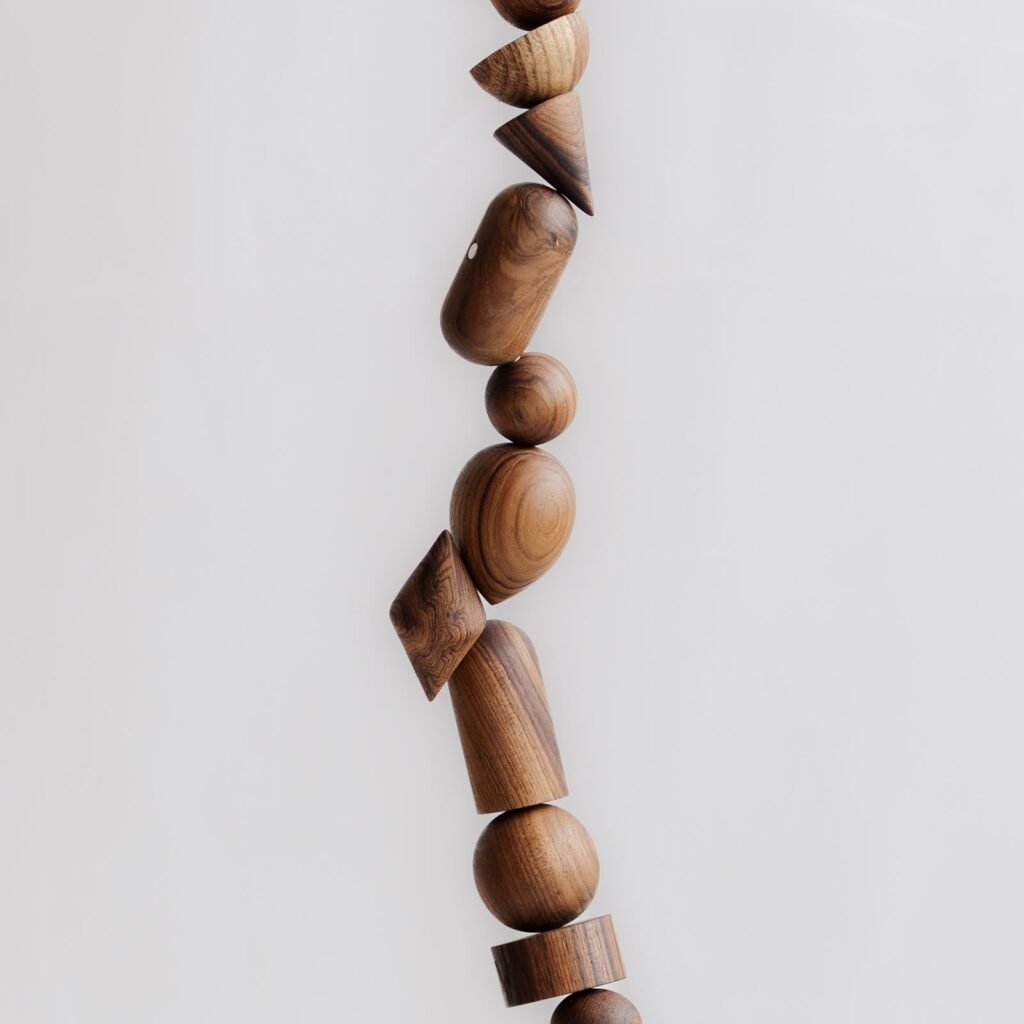
Blobs are now called Kit kit. A set of Kit Kit is priced at ₹2,100 It is a set of nine distinct teak wood pieces, each embedded with neodymium magnets in unexpected places.
3. What inspired you to start this? Was there a gap in the sector, or an emotional need for children, that you wanted to address?
There wasn’t one moment that made me start this practice. It was more of a slow realization and constantly seeking to design for a space that I naturally aligned with. It’s always easier to commit to something that you entirely believe in, It’s easier to be authentic and honest when you create something you feel passionately about. In pursuit of finding something I deeply care about I did jump from one brief to another. This was also a time I moved across multiple cities to work and explore. And in hindsight I realise that I have always befriended children wherever I have lived; kids from the neighbourhood, friends’ children and now that I found my base in Surat Children from the farmers community living in panas gaam. It was at some point during these wonderful interactions with kids and also my personal pursuit to find something that spoke to me led me to PLAY. Children discover the world through play, and in that play transcend language. It is an instinct.
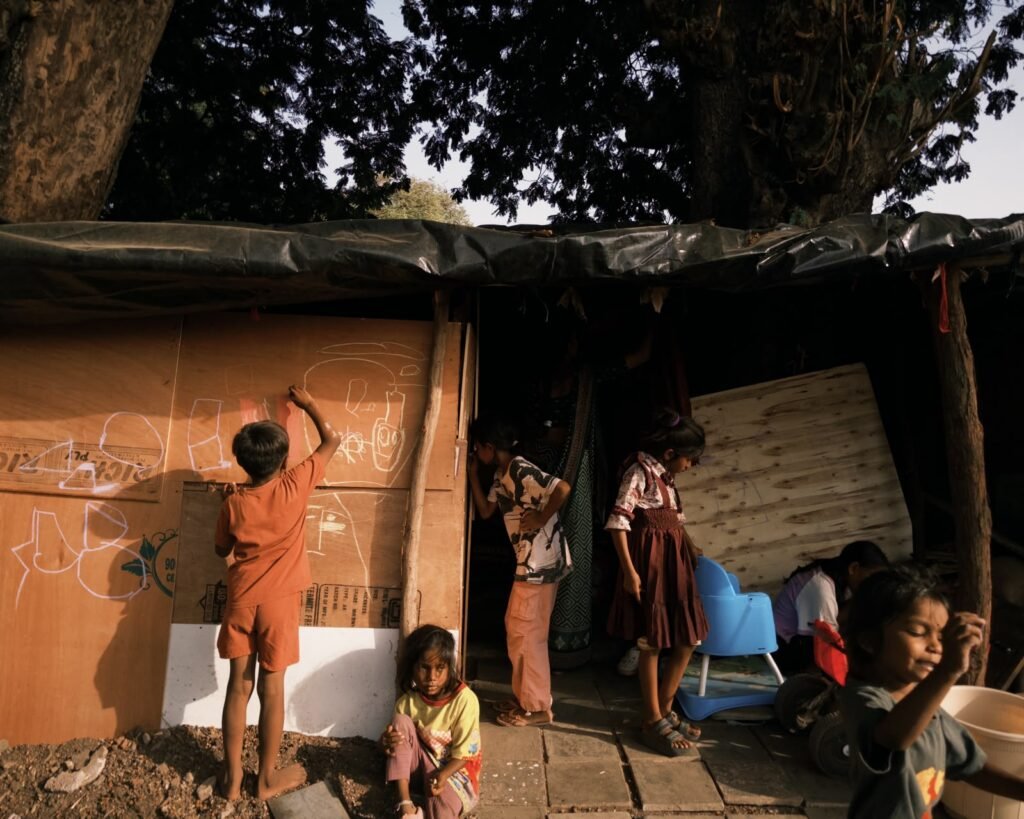
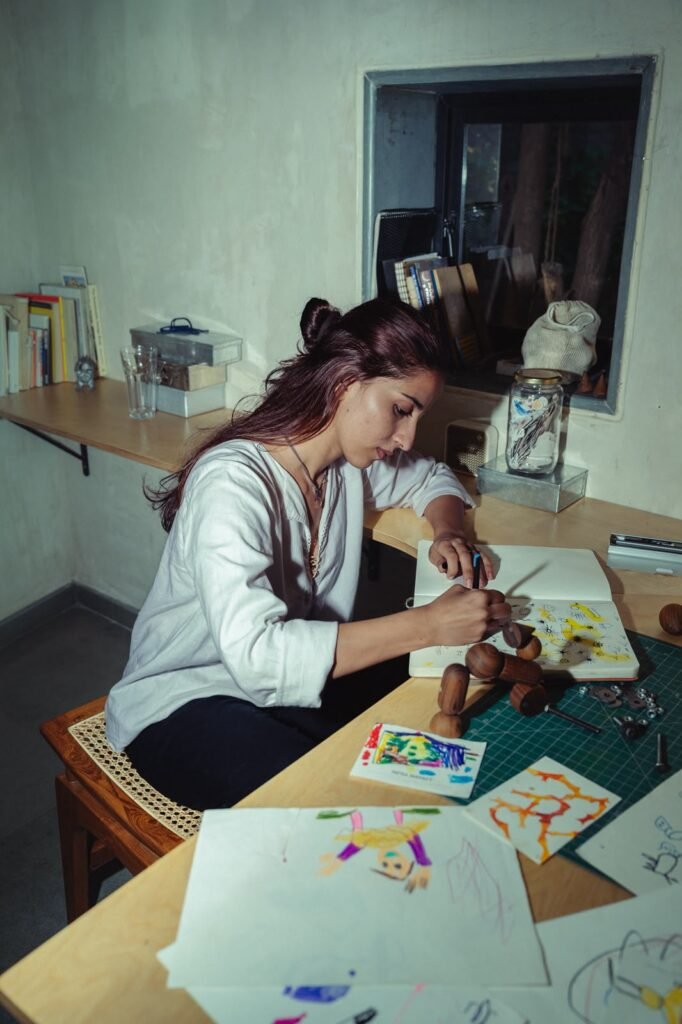
And I want to design for that instinct. I also observed how there are some good toys out there but at the same time have felt like children have this immense potential and the ingenuity with which they can turn almost anything into a plaything. I wanted to shift how toys are being thought of. I wanted to start with a clean slate and at some level also change what they look like, feel like. And if I had to be honest it’s not difficult to design a toy a child would play with, children are capable of turning scraps into toys! So when I design toys I don’t think of its ability to be played with/colours (which I believe is often a facade when it comes to toys)/ the sensory potential, how easy/ how difficult. I observe how kids already play, think and wonder, and how I can design objects, tools, experiences to push that curiosity to the next level. I work with the kids, collect their artworks, make objects with them, often take my prototypes to them and they tell me what they think through play and sometimes with their honest feedback. As I spent more time with children I also began to realise how much the younger me would have wanted a better space to grow and thrive, better toys and spaces to play and most of all more freedom to follow my curiosities. And this is when I imagined the other yard, the space I longed for as a child carried into the work I make now.
I began spending more and more time with children in neighbourhoods, out on the streets, construction sites, watching how easily they invented games, rules and playthings from whatever was around them. Eventually I wanted to get closer, speak to them, play alongside them and understand that strange logic with which anything could become a plaything. This slowly changed the way I thought about toys. I became less interested in toys that define play for the child, and more interested in making objects that leave room for curiosity, imagination and many different ways of playing. In a way, I’m also making the kind of toys I would have loved to play with as a child and honestly, still would.
4. Is there a broader community or societal mission behind the brand, beyond the product itself?
Yes, very much. The Other Yard is not only about making toys. We are slowly building archives around play, childhood and stories. One of our early enquiries involved collecting children’s artworks and studying them over several months. Their drawings became an incredible way of understanding how children express feelings, tell stories and make sense of the world through imagination. Documenting play is also a big part of the practice. One such documentation led to a short film capturing child-led play. This documentary simply captures how the children from Panas Gaam and a construction site in Surat, constantly found ways to turn ordinary things around them into playthings, and filled their day with so many forms of play despite the lack of access to formal toys and play spaces. This engagement has gone far beyond the film. I still visit the children at Panas often. We sit around, I listen to their stories, and mostly, we play. This relationship continues to shape how I think about toys and the work we make. Our studio has also slowly become a space for community play sessions and meet-ups. I would love to do much more of this, bring people of different ages and backgrounds under the same roof, simply to play together.
My larger hope is to shift the way we treat play, from something secondary, frivolous to something deeply essential to life. And perhaps, to help us hold on to that instinct a little longer instead of slowly growing out of it.
5. Where are you currently available, just Surat/Gujarat, or wider (national/global)?
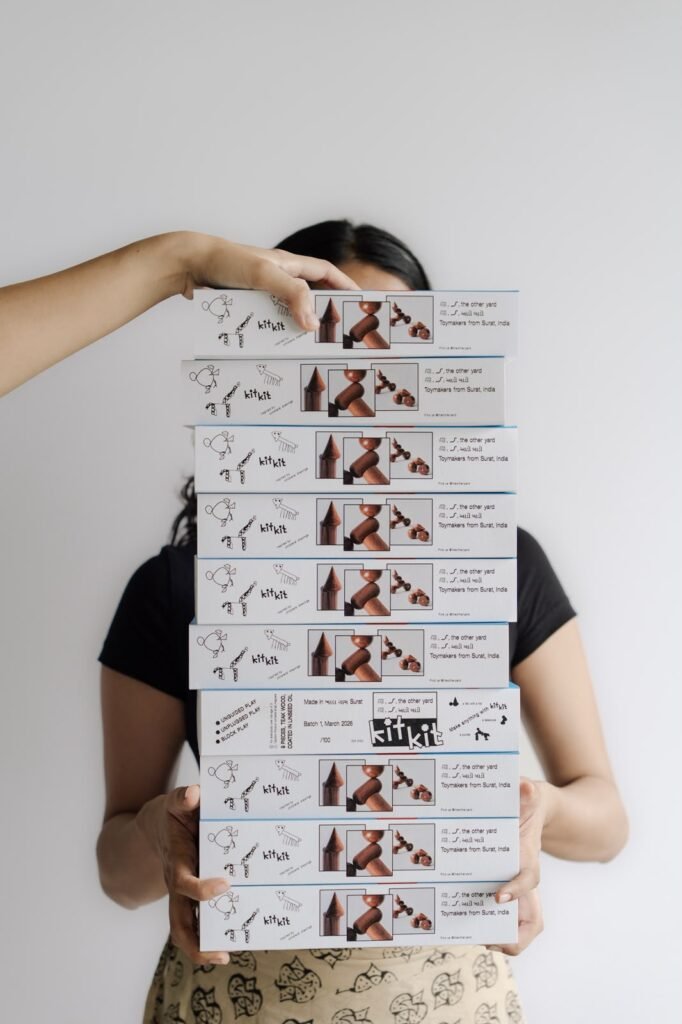
We currently ship across India. At the moment, we take orders through dm on Instagram. Our website will be going live soon as we begin launching more toys. We aren’t distributing internationally yet, but that is something we would like to grow into.
6. We noticed you use a lot of Gujarati in your branding. Is that a personal/cultural inspiration, or a deliberate choice to target the Gujarati/Gujarat market specifically?
Haha, this one is definitely personal rather than a marketing decision. Most things at The Other Yard tend to come from lived experiences rather than from thinking about it from a marketing lens. The Gujarati presence comes naturally from where the studio is based and from the children and experiences that have shaped the practice. Even આડી બાડી came from one of those moments. One afternoon, while I was visiting the children from Panas Gaam, we were all playing in the field, running around, some of them screaming when one of them suddenly shouted, “ये देखो हम મ ૂઆડી બાડી मैंआ गए है।” It was a completely made-up phrase, but somehow I knew exactly what he meant, look, we’ve entered the other yard!
Ever since, આડી બાડી has sat right beside The Other Yard as its own kind of translation.