
Women in Power Suits: Taarini Anand on redefining Menswear through the female gaze.
You’ve said fashion happened to you on a whim but stayed for good. What was that defining moment when it shifted from curiosity to conviction, when you knew you were building something real?
I went to fashion school out of curiosity. I remember staying up all night working on illustrations, designs, and my portfolio, perfecting them beyond what was even required. I would make over 250 designs for a collection that had only 20 looks. I realised how much I enjoyed the process, and that dedication came very naturally. My work was highly appreciated, far beyond what I expected, and that validation mattered. It felt incredible to have found a purpose for myself. The more I created, the more it felt like home. That obsession made it clear this wasn’t temporary; it was something | wanted to build my life around.
You’ve worked in both Italy and India, two very different design ecosystems. How have these experiences shaped your creative and business philosophy?
Italy taught me discipline, structure, and the value of precision. Everything is organised, deliberate, and incredibly refined, with a deep respect for design integrity and quality. India, on the other hand, is human, raw, and full of emotion. It’s where the craft breathes life into every idea. You can’t just design here; you have to collaborate, communicate, and constantly adapt. My brand sits somewhere between the two, with the precision and rigour of Italy grounded by the soul and spontaneity of Indian craft. That duality keeps us authentic yet globally relevant.
You mentioned that your masterji is the most-called person on your phone; a detail that says a lot about how you work. What does that relationship reveal about the role of artisanship in your brand’s identity?
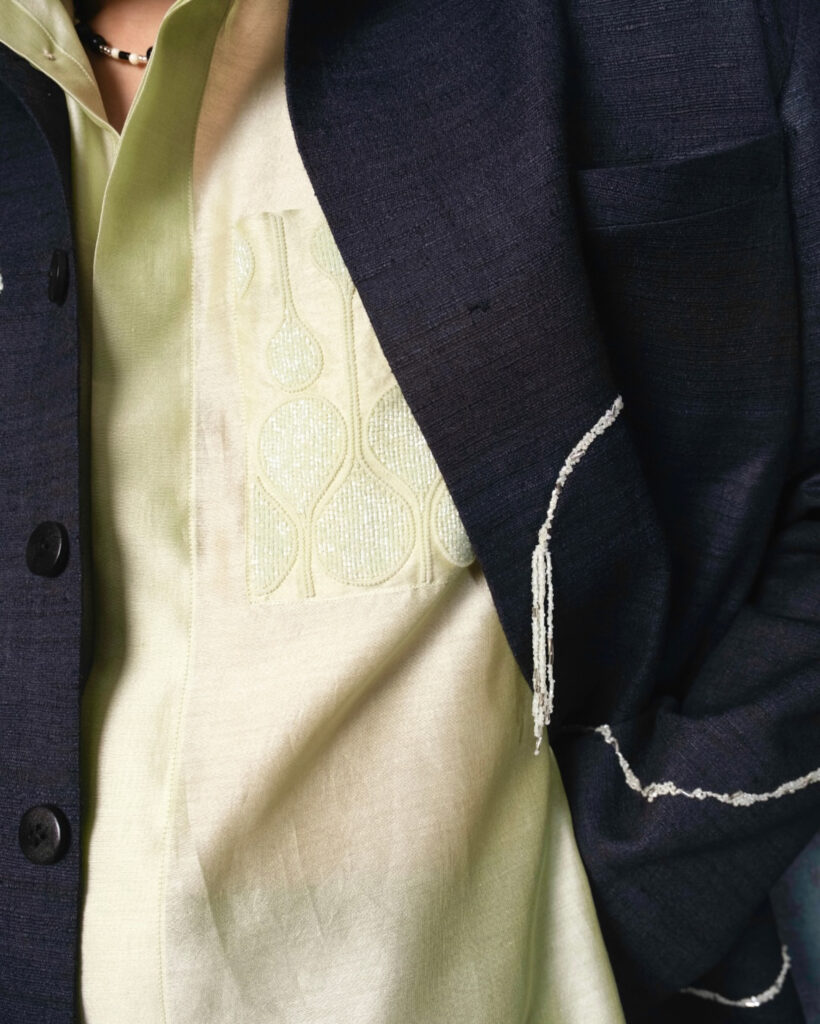
The brand is really built on two pillars: Indian art and craft. Craftsman, especially my Masterji, aren’t just executing my designs, they’re part of the creative process. We experiment, argue and problem-solve, and often, his suggestions improve my designs. There’s a shared rhythm, understanding, and trust that builds over time. That relationship reminds me that craft isn’t just about skill; it’s about people, patience, and the joy of making something together. There are several people involved in the making of a single garment, each with a distinct role. My job is to bring it all together in harmony. That closeness to the process keeps the brand honest and human, and I think our customers can feel that authenticity in our clothes.
You once said, “Craft relies on intuition, business relies on systems.” How do you balance these two worlds in your daily?
I don’t think true balance exists; it’s more of a flow.
Some days I’m completely immersed in design, concept, and storytelling. Other days it’s production plans, finances, and operations. But I lead both sides equally because I see them as extensions of each other.
Creativity without structure never sustains, and business without imagination doesn’t evolve. The challenge is to move fluidly between the two, being able to design a collection one moment and direct the larger business strategy the next. That dual approach keeps the brand cohesive, progressive, and deeply personal.
In a world chasing speed and scale, what does success mean to you right now?
Honestly, hearing from customers who truly appreciate what we do feels like success. Every message and every returning client means a lot. We’re still small and independent, so each milestone feels personal. For me, success right now is simply being able to keep creating and growing with the same intention. It’s about building something that endures, not just in design but in spirit.
You’re a woman leading a menswear brand, how has that shaped your experience or perspective within the industry?
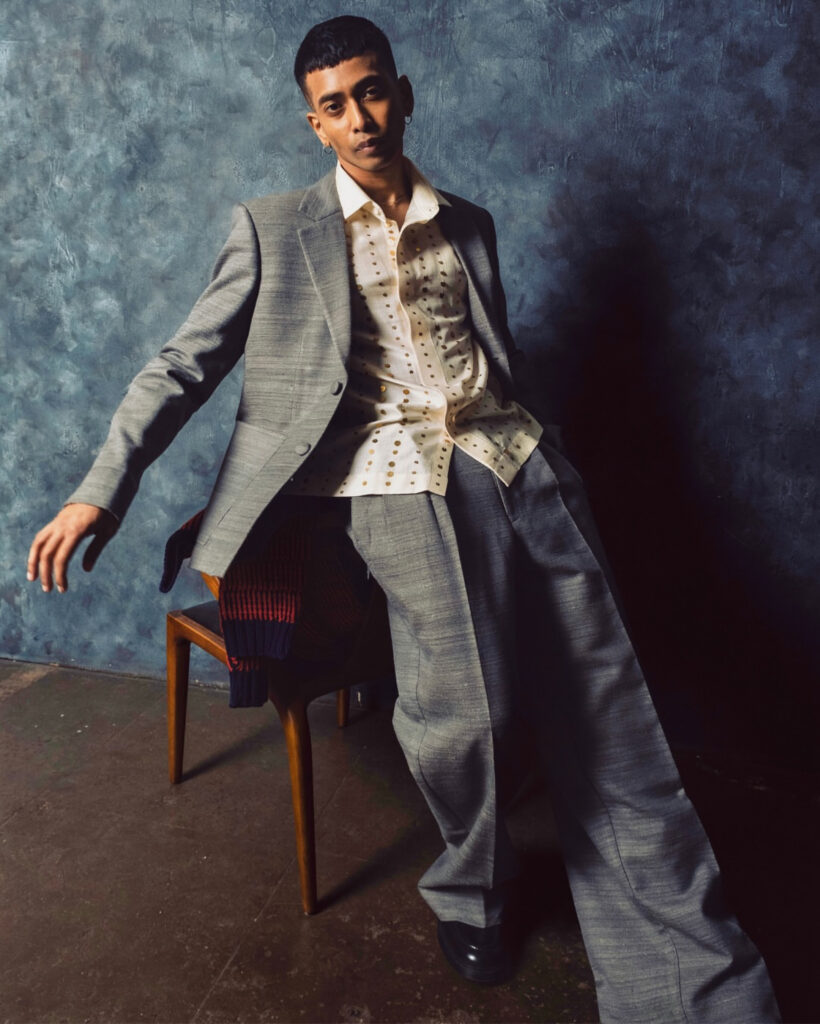
Some of the most influential menswear brands today are led by women, with Grace Wales Bonner’s recent appointment at Hermès Men’s being a significant one. I like to think of it as men being written by women.
There’s softness and curiosity in how we approach menswear. Honestly, what we make can really be worn by anyone, not just men. I love wearing menswear myself, even beyond my own brand, and a substantial percentage of our clientele are female shoppers. I’m not designing for men as much as I’m exploring what masculinity can look like. There are conventions in ready-to-wear menswear, but the most exciting part of my job is challenging those boundaries and seeing where that takes us.