
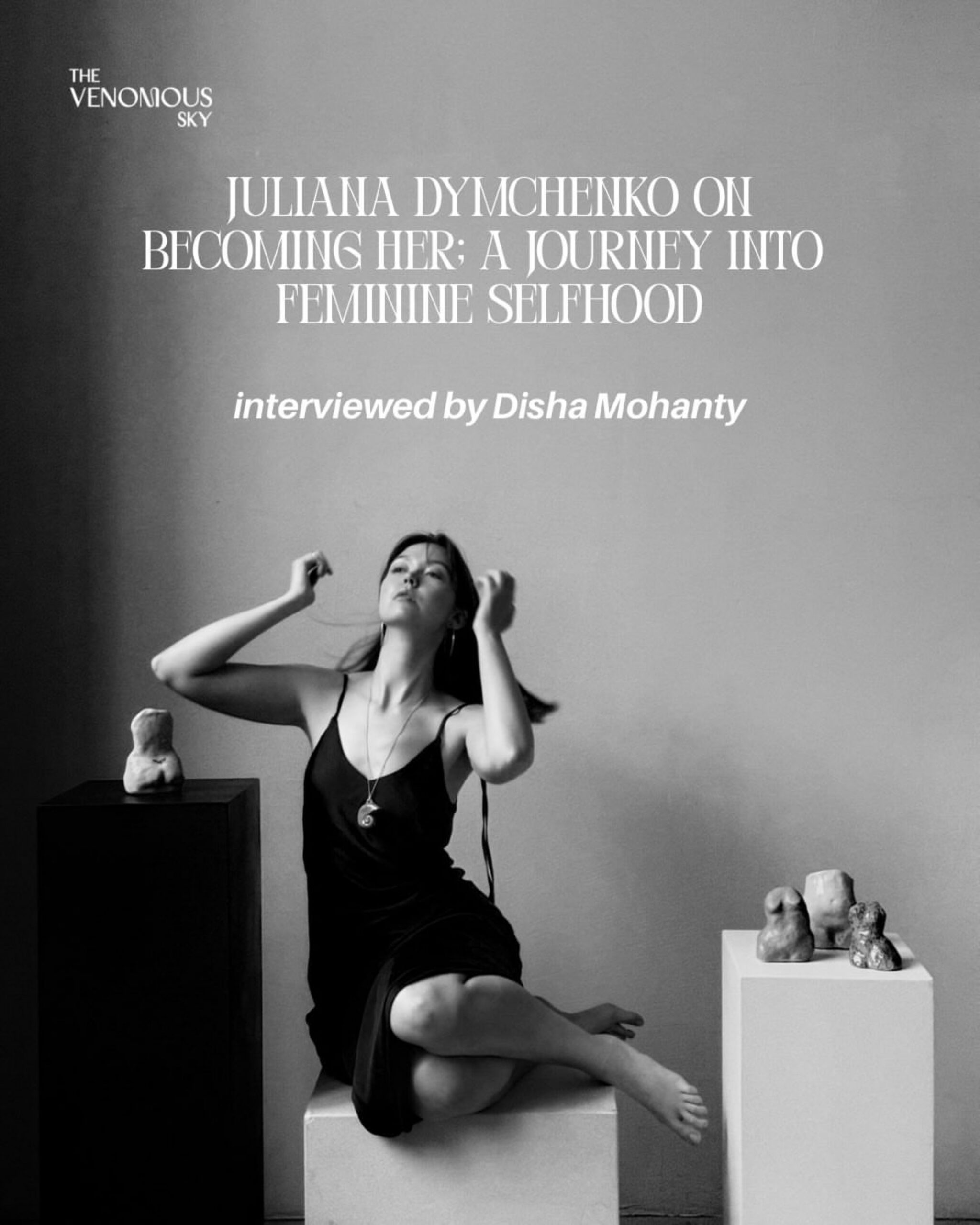
Juliana Dymchenko on becoming her: a journey into Feminine Self-hood
If you could encapsulate your journey of becoming a woman into a single visual image (a colour, a shape, a scene, or a metaphor), what would it be, and why does it feel true to you?
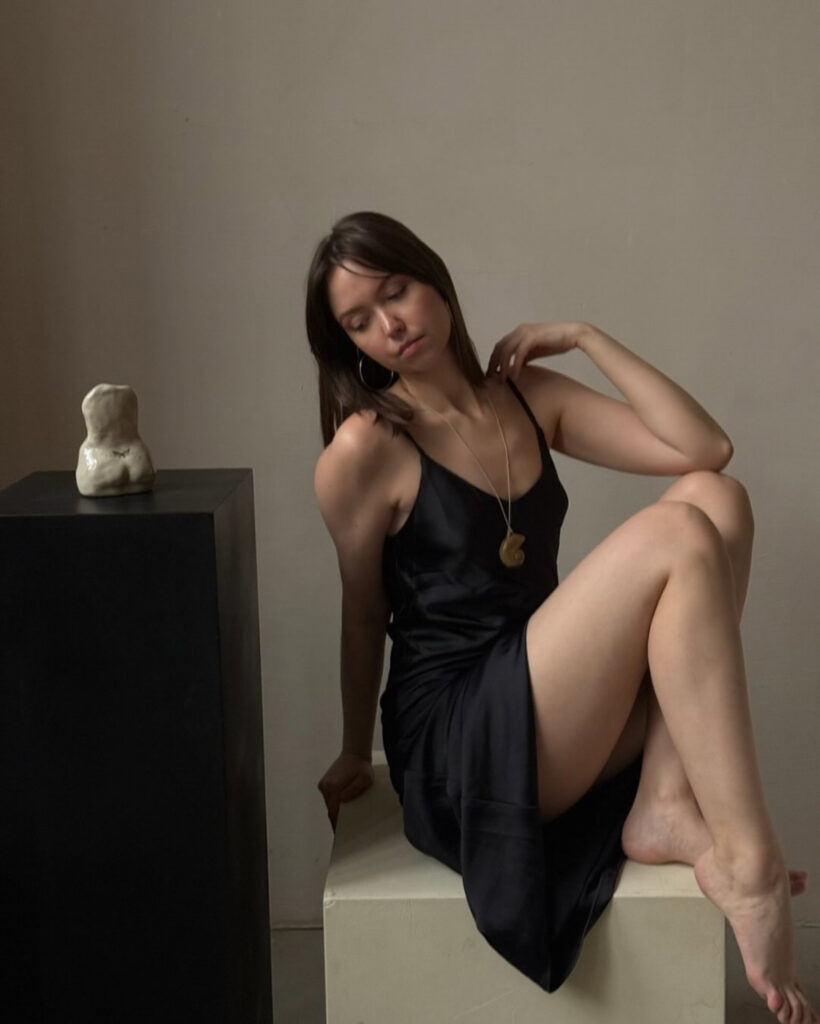
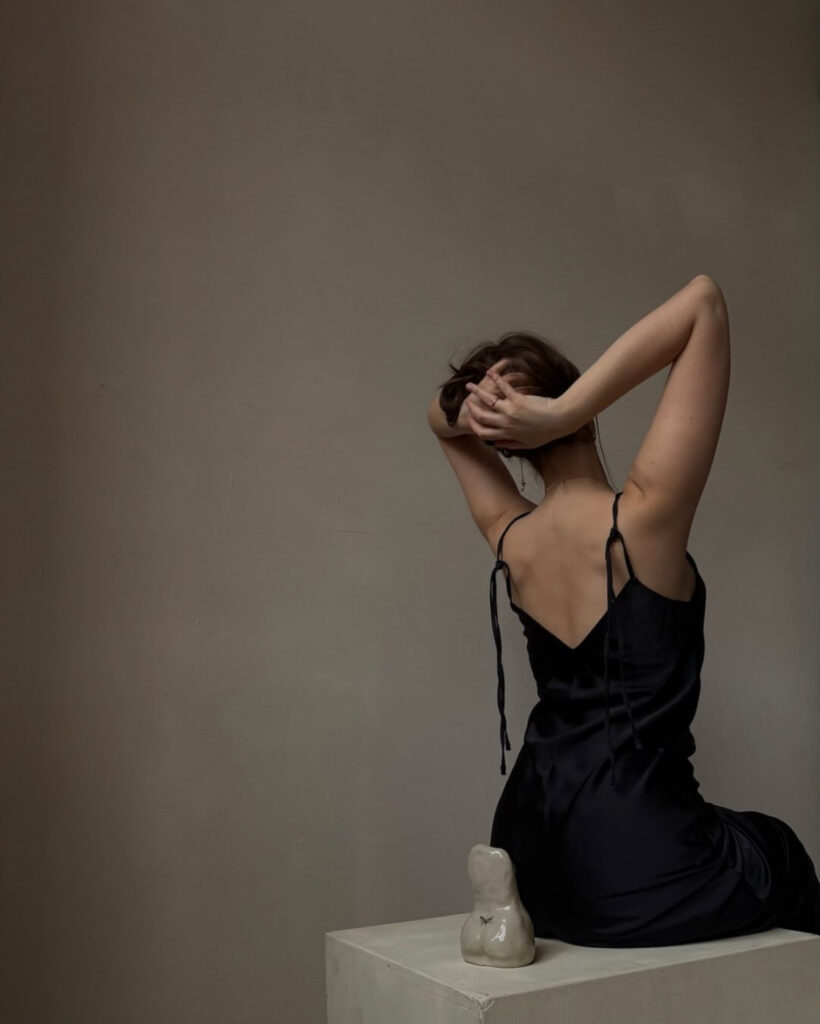
I would express my personal journey through an art object in the form of a seashell. My series The Mermaid’s Tale was dedicated to the mysterious image of a woman and her inner power. The seashell became a manifestation of femininity, and my work on myself led me to create this series. I always live through emotions first, and only after reflecting on them do I create my pieces.
The journey toward this series was a process of acknowledging my strength, my femininity and sexuality, and working through my shadow sides.
Many artists explore girlhood as a space where innocence and self-awareness overlap. Artist Jenny Saville once said, “Flesh is the most democratic material, it communicates who we are without words.”
How do you relate to this idea when you think about your own transformation from girlhood to womanhood?
I agree with this idea, and I would add that the body and its language never lie. Transformation isn’t fast – it’s a slow process, often connected with inner psychological work. Our body changes visually, but I feel that the mind transforms first, and only then the external form follows the inner change. That’s how it was for me – my body echoed the changes that took place within.
When you think about “growing into your body,” what is the first memory, feeling, or moment that comes to mind, and how did it shape your understanding of your own femininity?
I feel that a person’s individuality begins to form in childhood – as a set of personal qualities that make you unique. At some point, I began to move away from myself, and my “becoming” started from the moment I managed to return to myself again. I acknowledged myself, including as a woman – I accepted that I would not always remain a girl, and this process of growing up set me free. It changed my sense of femininity.
Recognizing my shadow sides gave me strength and the ability to express myself in the world. I needed to step away from social pressure and come back to my own nature, to choose the path of art – the path my soul was asking for – and to accept myself as a woman.
I believe that being a woman is a great gift.
Femininity and beauty are not defined by form. In my art, I depict different bodies; I create images of different women – they are all, in some way, parts of me. I am not searching for perfection in form. I need the image to be imperfect, because the moment we try to make ourselves flawless, we lose ourselves. We often chase an ideal, but through my work I want women to see their bodies differently.
How has your perception of beauty, your own or the world’s, shifted as you’ve grown older? What did you once believe about femininity that you no longer do?
I have been studying art and painting since childhood, and I have seen different bodies, and my teachers talked about the beauty of the body through art. For me, the body has never been an object of sexualization.
My teachers nurtured in me an appreciation for all kinds of bodies – beauty does not depend on form, it is always something more. When I grew up, I retained this feeling;
I could see beauty in everyone, but there was a time when I did not see it in myself. It took time to learn how to recognize it within me as well. There was a moment when I believed that to be feminine one had to be special, but later I realized that any woman can be feminine – you don’t need to be someone else, you just need to be yourself.