

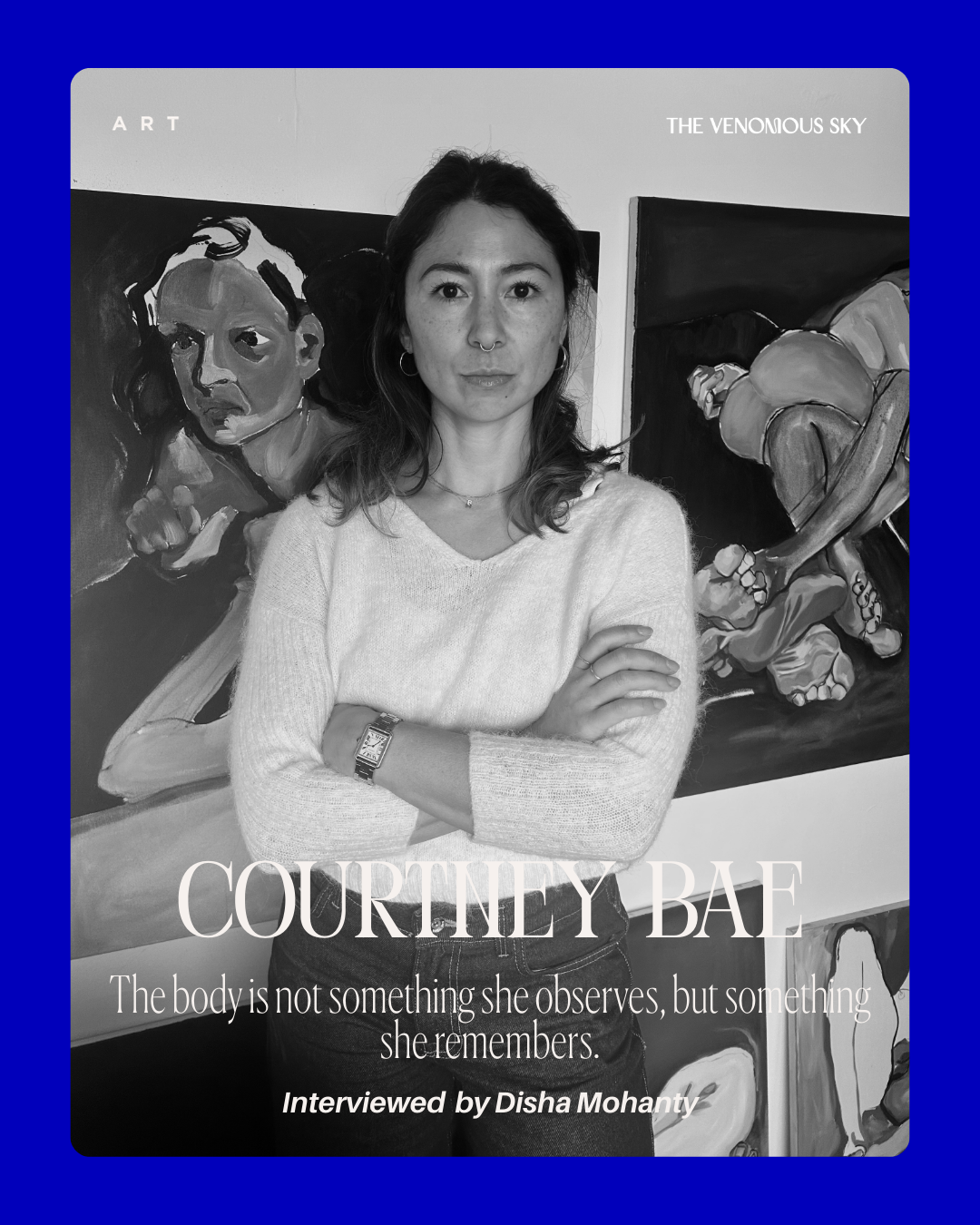
In her deeply introspective practice, the artist turns emotional memory into form, painting vulnerability, shame, and resilience as acts of quiet becoming.
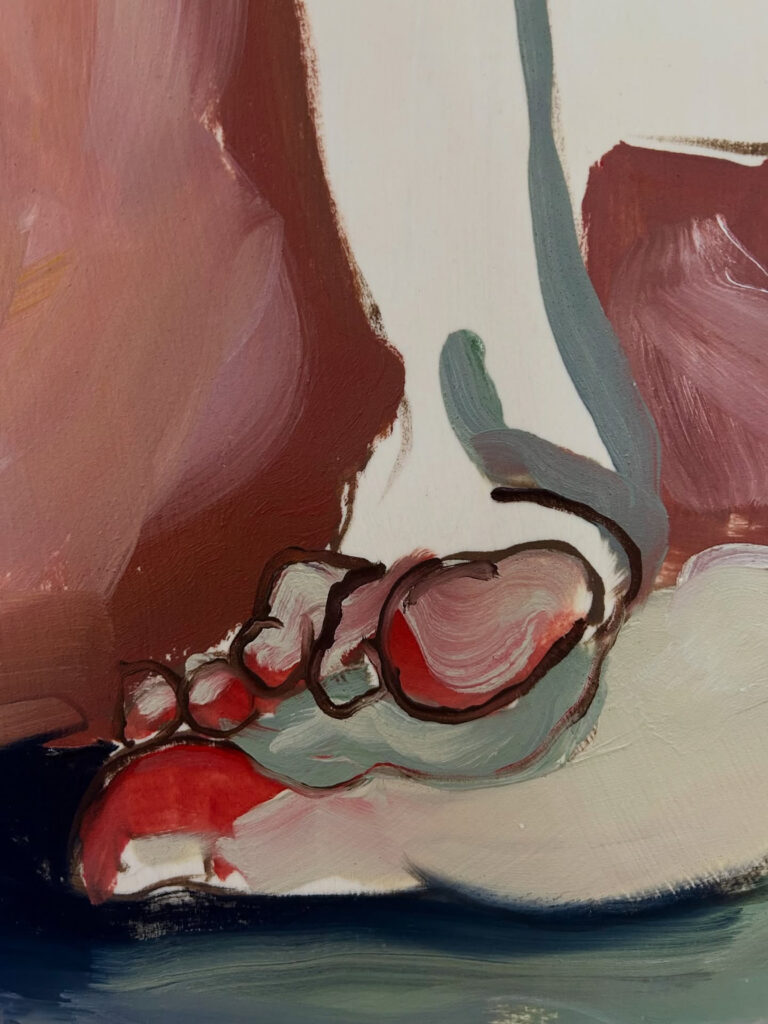
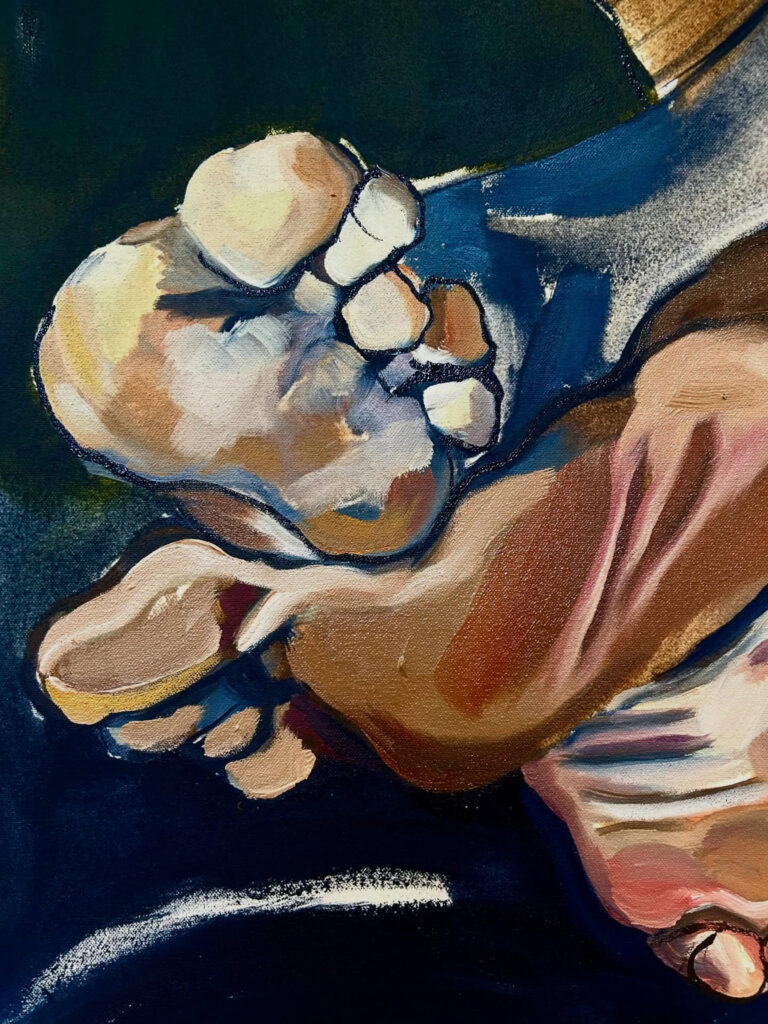
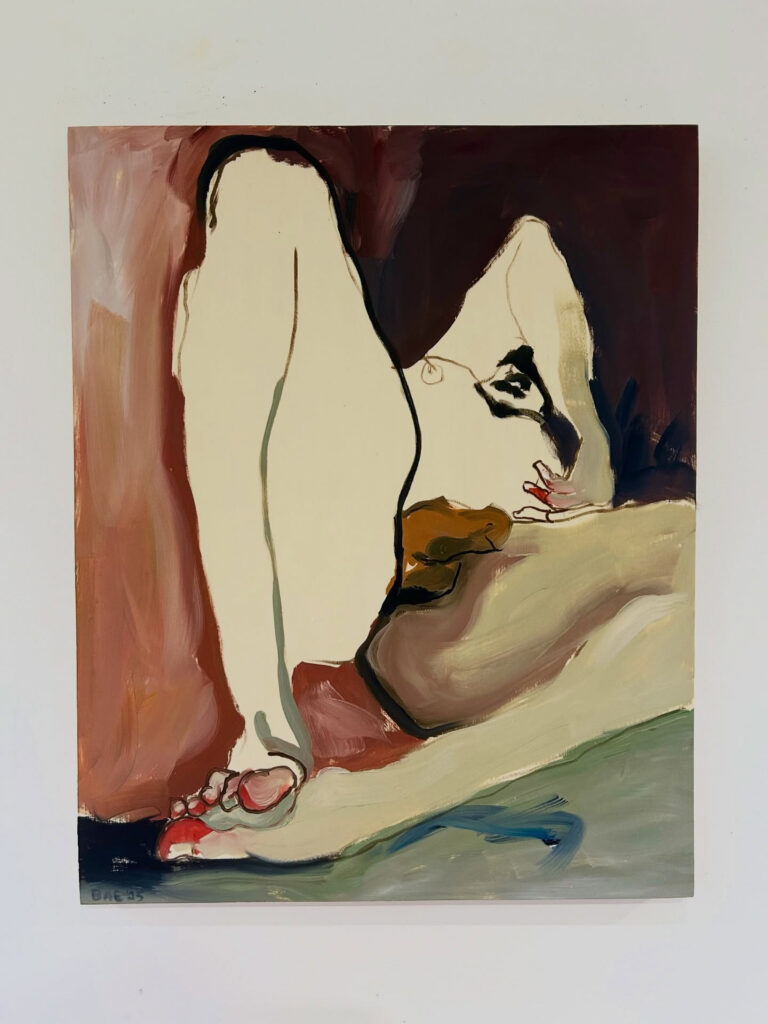
“I paint the body not as it appears, but as it remembers.” How does memory, particularly emotional memory, shape the figures you create? In what ways do trauma and resilience become visible through the physical form in your work?
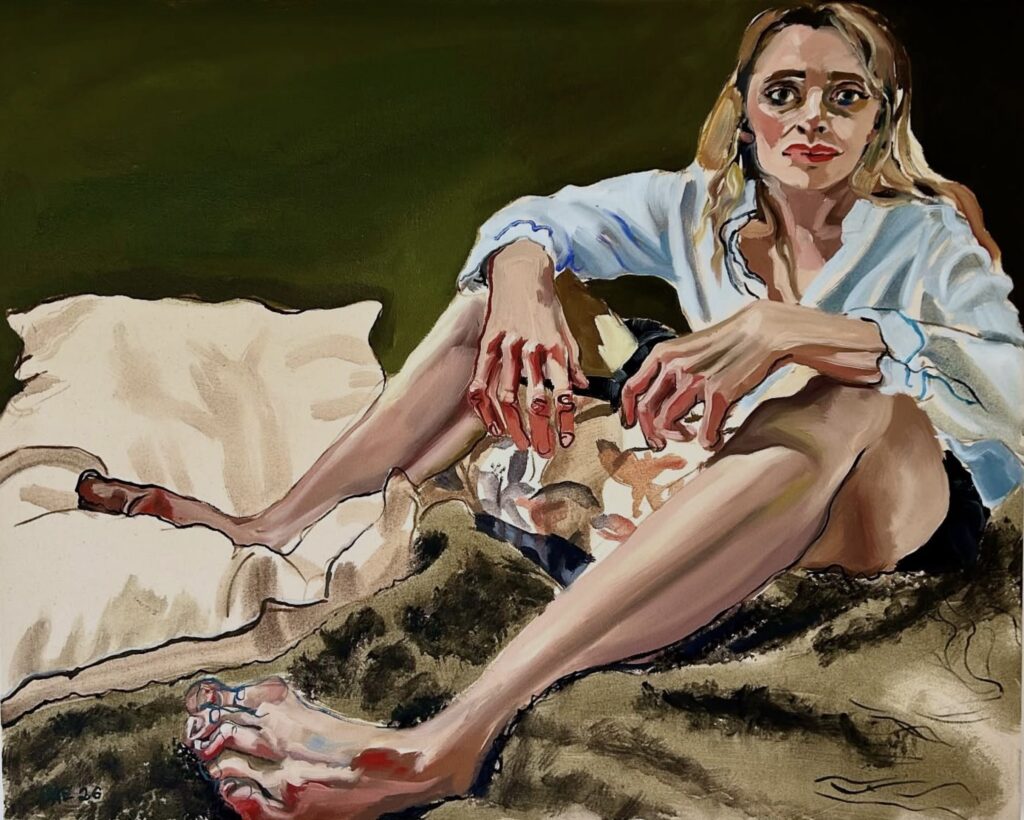
My figures are all imagined from the way that I recall the human form. The positions in which I choose to put these figures in, is dictated by instinct. They are never forced or aggressive, and they invariably come from feelings deep within me. Sometimes I am caught by my current mood, which then becomes the catalyst for digging deeper. But more often the process is about returning to my lived experiences, using the feelings that these conjure up today to then inspire the composition, colours and so on. It feels to me a lot like choreographing and performing a dance, but in my case it’s a moment in time rather than something moving. I find these moments, sit in them and even poke around rather than shy away from them. It’s a process of opening up a vulnerability and investigating it. The outcome is a learning and a growth and that’s where the resilience lies.
Your practice explores vulnerability and shame with remarkable directness. What compels you to confront these often-unspoken emotional states so openly, and how do you navigate the balance between personal exposure and universal storytelling?
I grew up surrounded by poor communication and it made me so fascinated with why people don’t just say how they really feel. It was as though I wanted to come out of this web of miscommunication and in doing so it drew me to this idea of finding inner truth. Humans have this incredible ability to assume, compensate, misunderstand, misinterpret and misconstrue – internally as profoundly well as with others. It is what drew me to conflicting topics like female sexuality for example, whereby I believe there was this underlying shame that was put on us as girls, that one day we were told to flip the switch and become sexy as it’s not shameful anymore as an adult. I have grown to see that this is a human instinct not unique to my own personal experiences and therefore it is universal at the core.
Having worked within the worlds of luxury fashion and global brands like Miu Miu and Prada under the Prada Group, how has that experience influenced your visual language today; whether through discipline, aesthetic sensitivity, or an understanding of identity and presentation?
Prada group are a passionate bunch, they all argue and they disagree on a daily basis! But I believe it’s because they are such a passionate and creative group of people with living fire in their bellies. There is so much integrity to their creativity and I learnt a lot from my time at these brands. It taught me foundation principles about the creative process that directly translate into my painting work, such as colour, direction, textures, and mood. But they also taught me about the integrity of their work, if something wasn’t additive it simply wasn’t added, and as a whole the creative process was never treated like some mathematical equation, but rather it was about understanding a deeper mood or feeling or just understanding the Prada way. Prada itself is a challenger brand although it doesn’t present that way on a day to day basis. But they are a leading forerunner for the fashion industry and they keep the craft and creativity of it alive. They used to say that Seniora Prada lives in Prada and dreams in Miu Miu, and as I worked with these brands more and more I learned the nuance of what that really meant.
Your brushwork carries both fluid dynamism and whimsical mark-making. Can you walk us through your creative process, from the first emotional impulse to the final painted surface? At what point does imagination overtake observation?
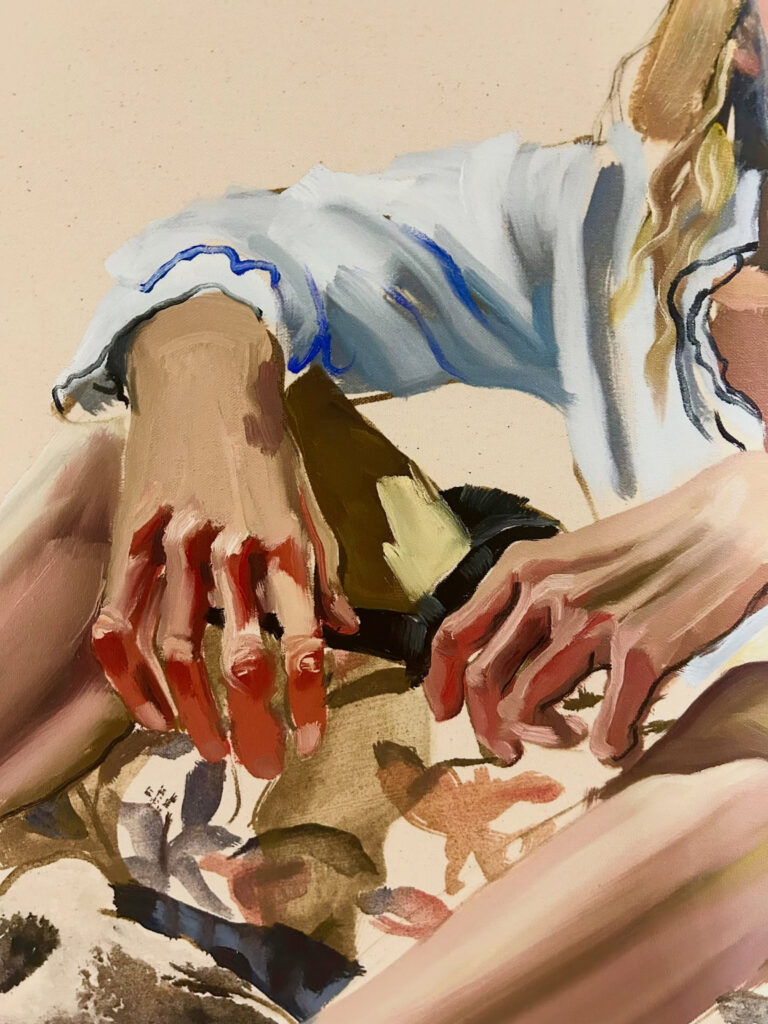
My imagination begins at the start and continues right through until the last brush stroke. I start in my sketchbook. It’s where I can play and do my working out. As I mentioned, the inspiration comes from a feeling inside of me so I’m building and building from this. I create a composition and I play until I’m happy, sometimes even picking up where I left off with an older sketch. I then play with the crop on my sketch. I think this is where my background in art direction plays in. I consider the pose, the perspective and the crop all very critical to my work. Then I bring it into the realm of the canvas, where I start sketching with a highly diluted raw umber. I love the way that the lines sketch out the work beneath it all. I don’t like to underpaint my works because it’s important that the raw canvas which is primed with a clear gesso, comes through and that the work feels raw. I like the play between diluted paint and heavily layered application because it’s like another conversation going on between them. I then flesh out the work, making careful decisions as I have to imagine the implications of these very decisions as I go before they happen. I think about where your eye will be directed, I think about balance, about the colour palette mostly to ensure it stays strict and true. Crucially at this stage of the process I leave the work at times so that I may go away and be thoughtful about my next moves. I continue this for quite some time, building up areas and carefully neglecting other areas. When I finally feel ready I start to introduce some very loose linework again, but I continue back and forth with a large flat brush again and back to the linework until I am happy. The entire process is so imagined that it ends up feeling like I’ve depicted a dream I once had.
As you prepare for your upcoming solo presentation, ‘A Project of Becoming,’ how do you personally define becoming? Is it a shedding, a rebuilding, or something more cyclical, and how does this philosophy reflect your own journey from designer to full-time artist?
Good question. I see growth as a choice. Sometimes we choose not to listen to our vulnerabilities because we are scared and as a defence mechanism we bury them away and we even have the ability to forget. But if we choose to hear them out and be curious, then we can keep asking more questions until we get to the bottom of it – this is the inner truth I speak about. If we can get to that truth then there’s nothing more difficult and then we can grow. If we don’t get there then we are like a tree with a branch that has been snapped in a storm and we struggle and fight to grow back but do not have the strength. However if we can grow from these traumas then we may grow back with a knot of wood and a slightly deformed branch but we grow back stronger now. I see our very existence as a project of becoming, that we are here to do that growing, not that we are growing simply because we are here – it is our purpose and it is what makes us human. So rather than shedding or rebuilding, I would use the words “digging” and “learning”.