

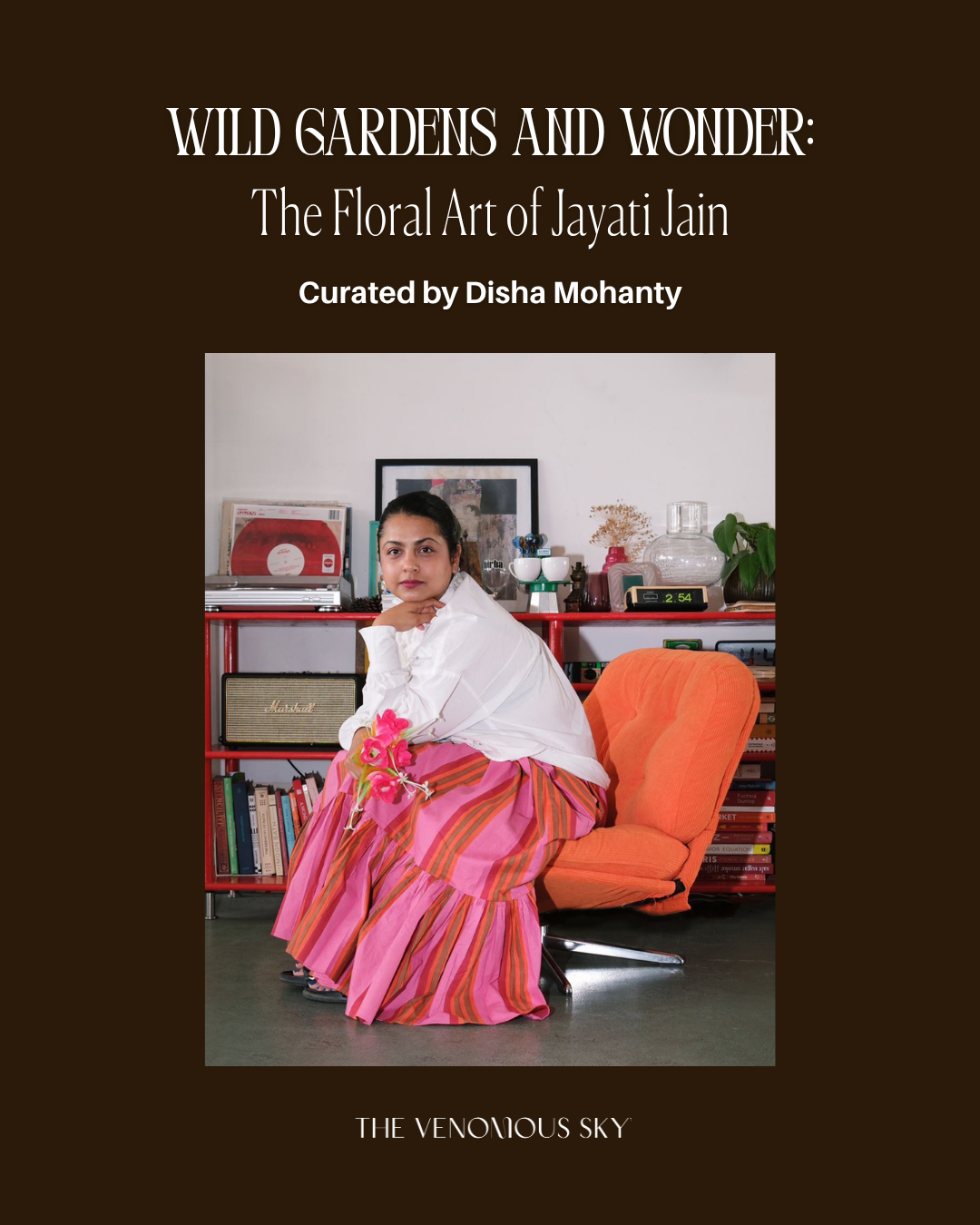
1. You call yourself a floral artist, not a florist. What’s the biggest difference in your process, and which “rule” do you most enjoy breaking?
I think the biggest difference is that I approach flowers the way I would any other art form. I don’t necessarily start with a brief or a particular style of arrangement in mind. I usually begin with something that catches my attention — a flower, its shape, a colour, or even an object — and build from there, figuring things out as I go.
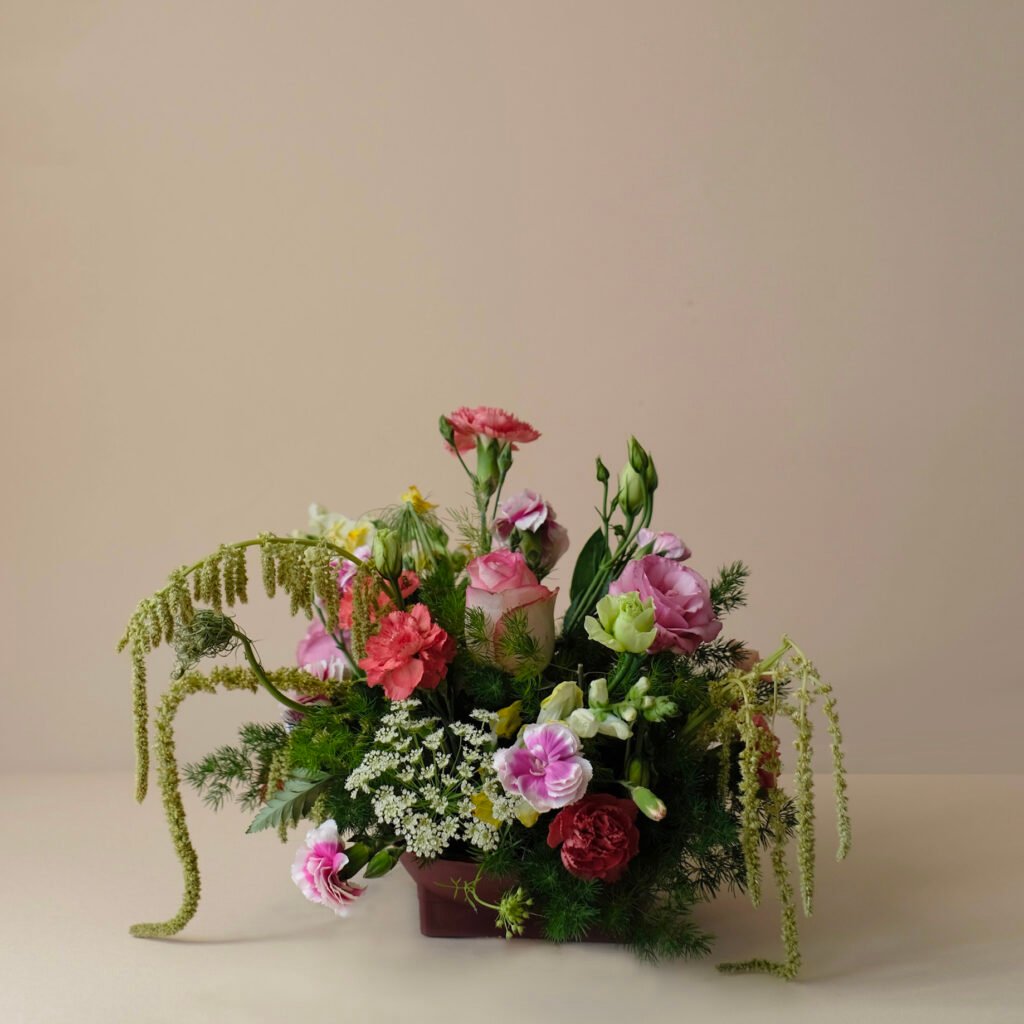
The rule I enjoy breaking most is probably what belongs in a floral arrangement. I’m not particularly interested in sticking to what’s traditionally considered beautiful or appropriate for flowers. I like bringing in everyday objects, fruits and vegetables, and creating arrangements that can be a little wild, unstructured or unexpected. For me, it’s about approaching flowers with the same freedom I would approach any other art material.
2. You’ve worked fruits, vegetables and everyday objects into your arrangements. What’s the most unexpected thing you’ve used, and how do you know when it belongs?
Kakdi (Indian cucumber) has probably been the most unexpected element for people! I don’t really start by asking myself whether something belongs in a floral arrangement. If I come across something I’m excited to work with, I go with it and build the arrangement around that element.
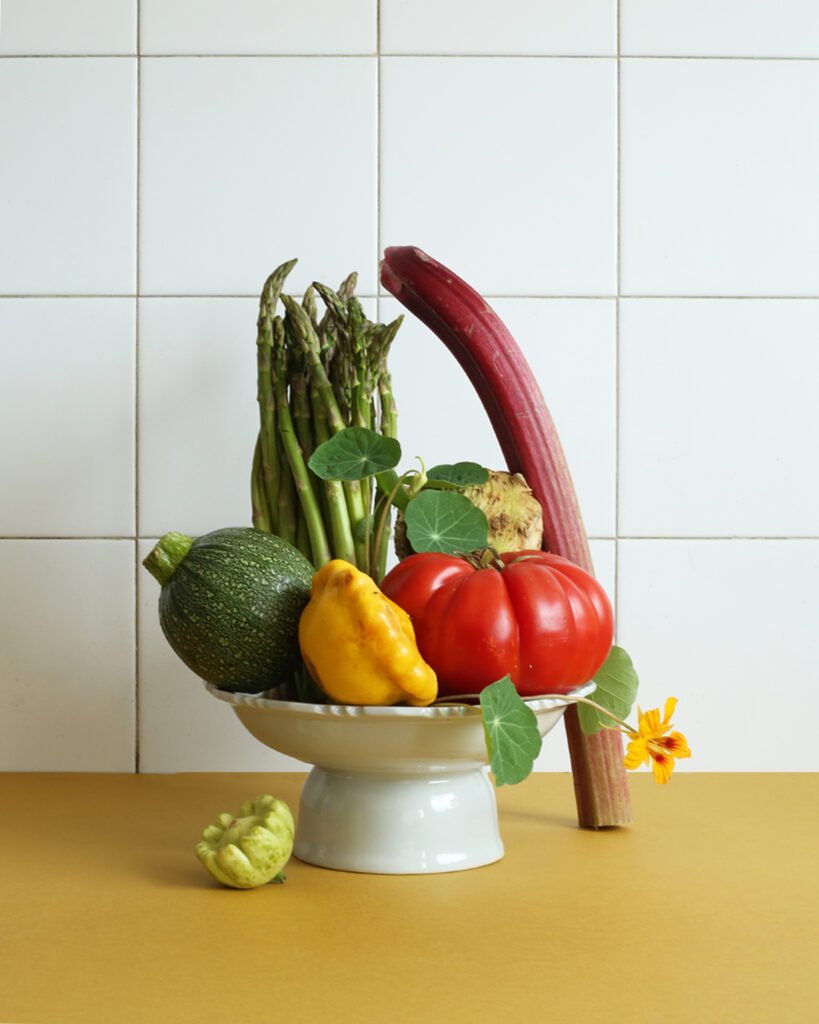
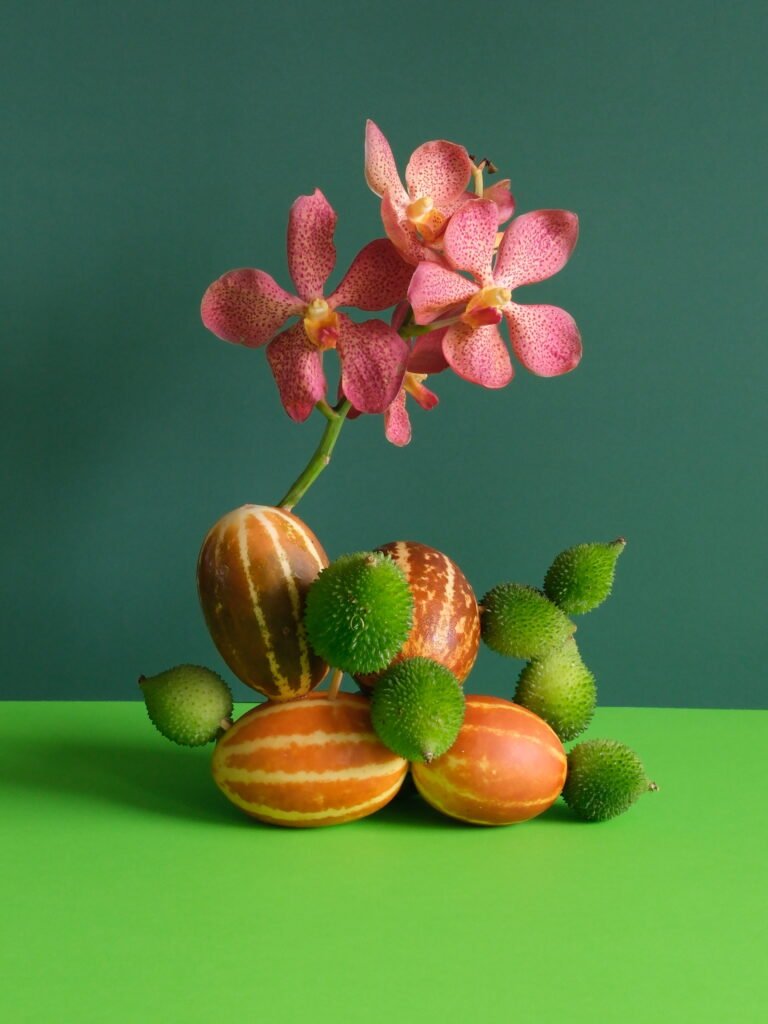
I enjoy figuring out how things that you wouldn’t normally put together can work with each other — through colour, shape or texture. Sometimes it works in a way I imagined, and sometimes it takes me somewhere completely different. That discovery is a big part of the fun.
3. Your nani’s garden in Dehradun shaped how you see flowers. How does that childhood sensibility still show up in your work today?
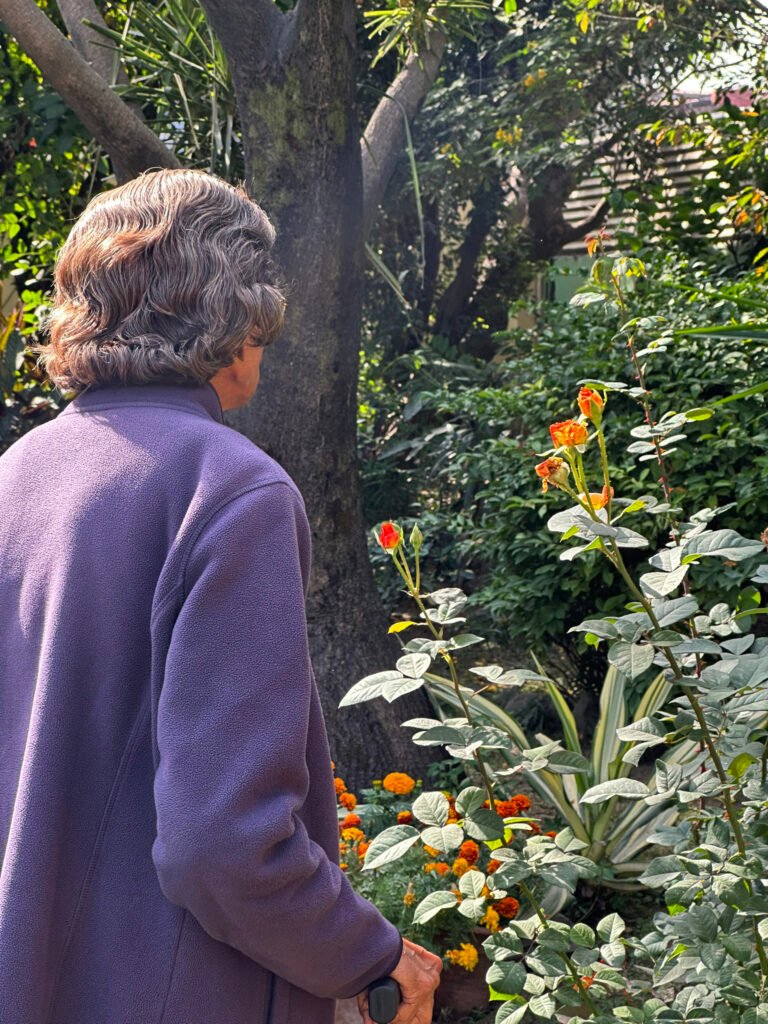
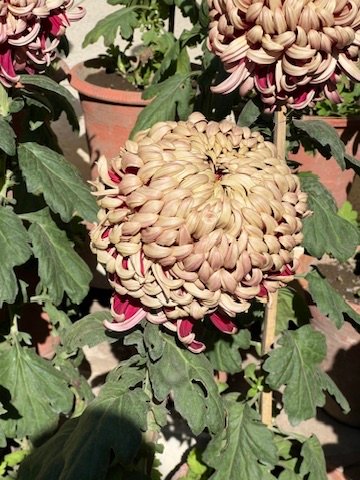
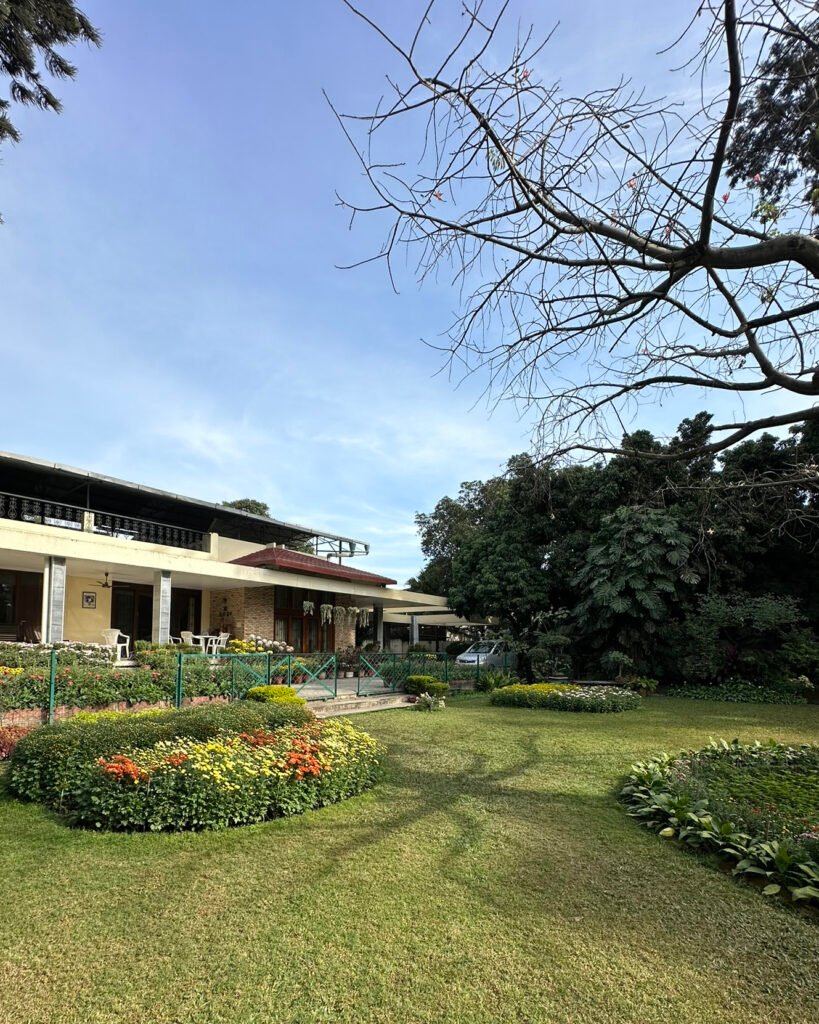
I think my nani’s garden is where my relationship with flowers really began. She was incredibly particular about her garden in Dehradun. She would plan which flowers grew in which areas every year and put so much thought into decorating different corners of the house with flowers.
Her arrangements were never conventional. She would use a mix of leaves, wildflowers and garden flowers, putting things together in ways that you wouldn’t necessarily see in a market-bought arrangement. Growing up around that taught me to appreciate flowers beyond just the blooms themselves.
Looking back, I can see how much of that has stayed with me. I think my love for foliage, my instinct to experiment and my preference for arrangements that feel a little less structured all come from those early experiences. More than anything, she taught me to love flowers and to really notice them.
4. What did running a pop-up shop, Fried Chicken and Flowers, with your husband teach you that making art alone couldn’t?
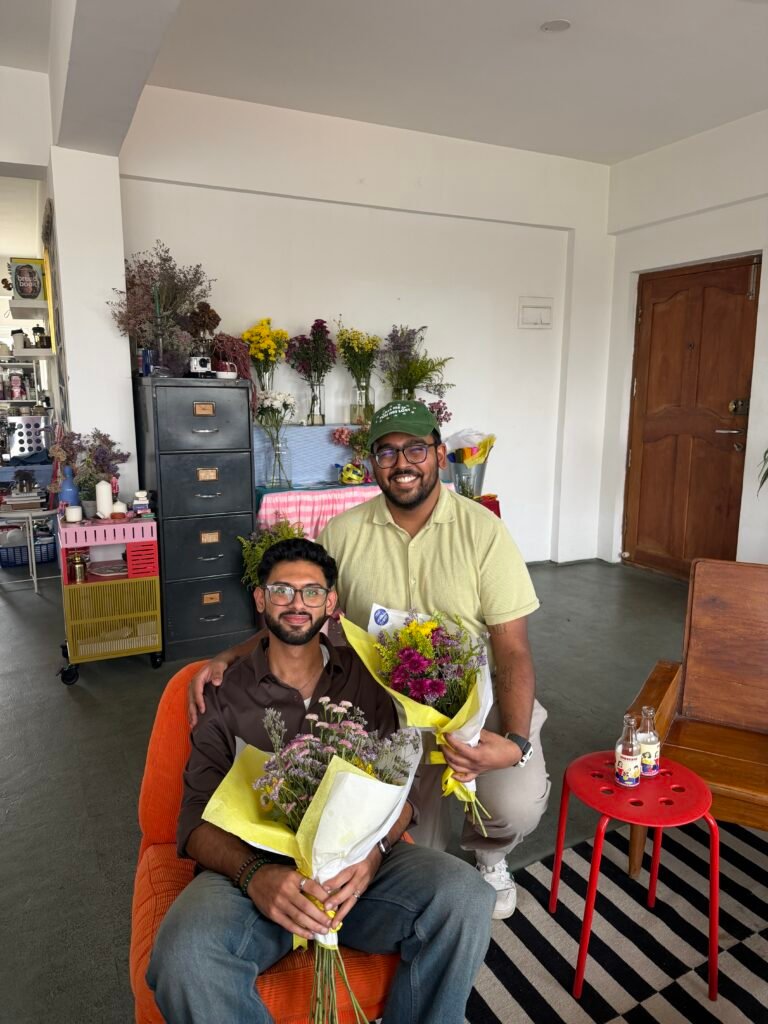
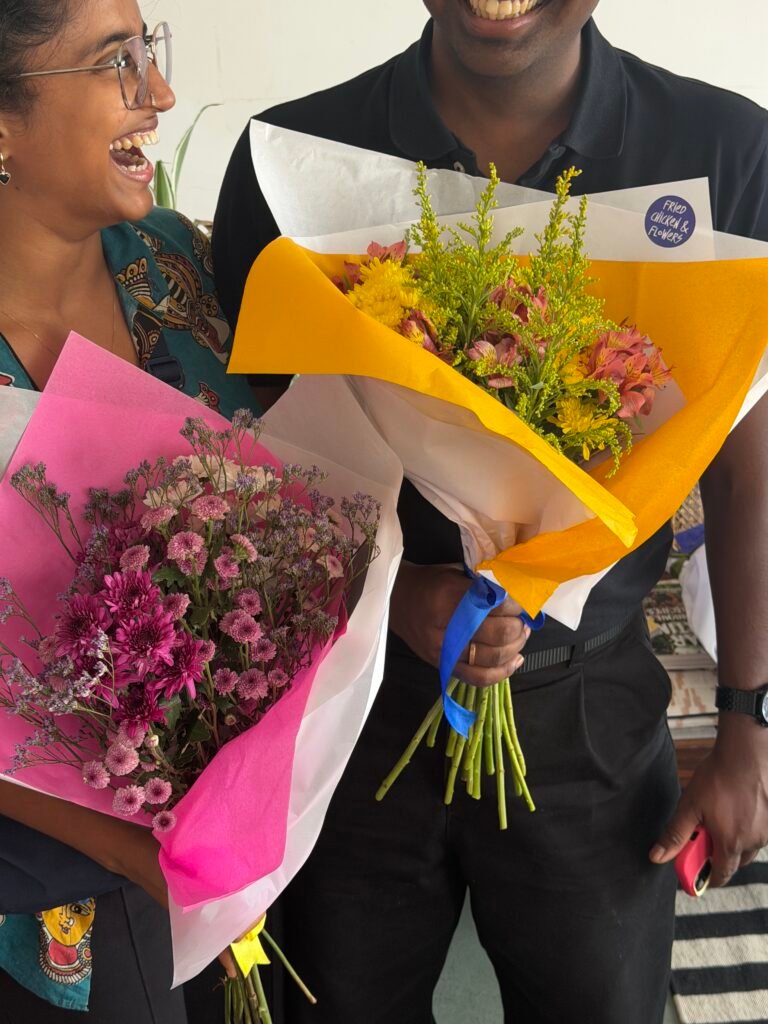
Fried Chicken and Flowers gave me a way to share my love for flowers with people who might not necessarily go out and buy them for themselves. The format is simple: everyone gets a sandwich and gets to pick their own flowers to make a bouquet.
It’s interesting to see how differently people approach it. Some arrive knowing exactly what they want, while others are hesitant and need a little encouragement. I love seeing people get more comfortable choosing their flowers and making something of their own.
I also put together a simple flower care guide so people could take their bouquets home and know how to look after them. I wanted to make having flowers at home feel easy and accessible, rather than something reserved for special occasions or people who know a lot about flowers.
Making art with flowers is a very personal process, but the pop-up showed me another side of it the experience of helping someone discover that they can enjoy flowers in their own home, too.