
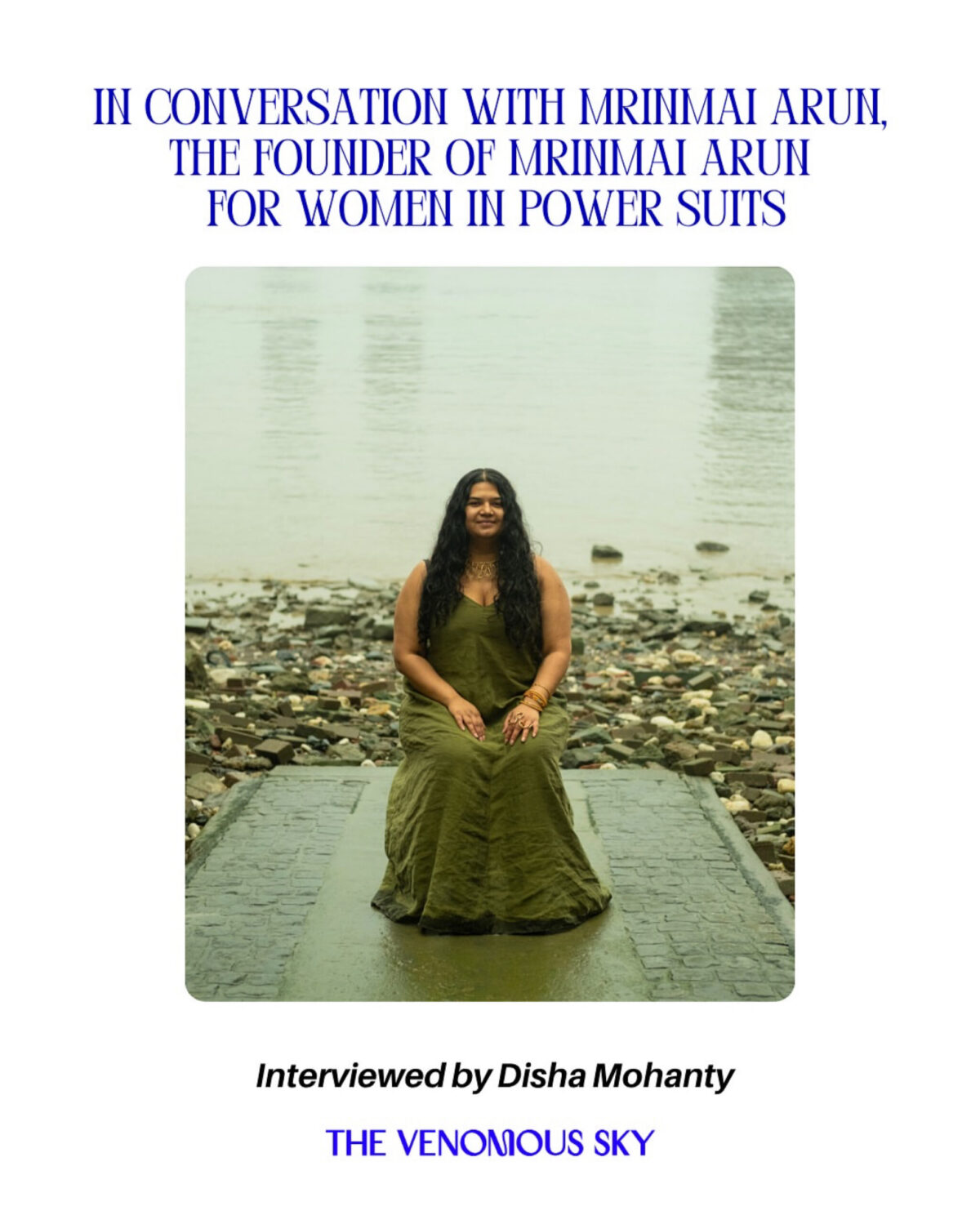
Women in Power Suits: In an conversation with Mrinmai Arun, the founder of Mrinmai Arun
You started with sculpting and then moved into wearable art. How did the tactile, 3D nature of sculpture shape the way you think about jewellery on the body?
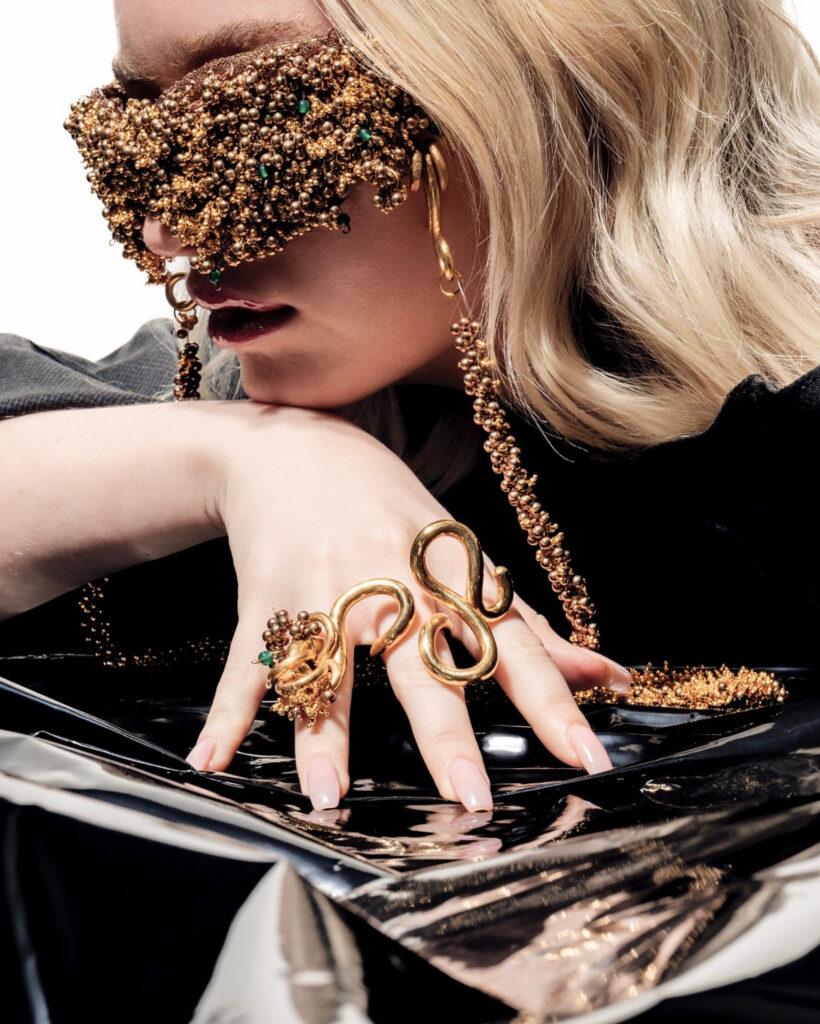
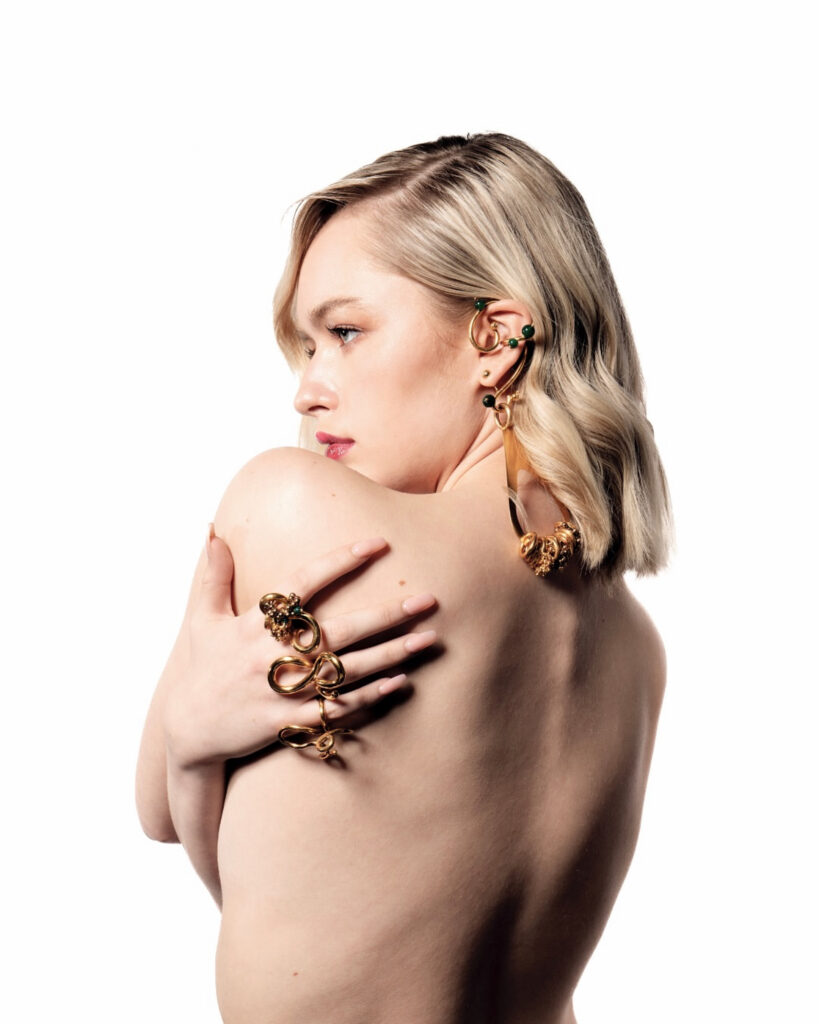
The shift from sculpture to wearable art felt like a very natural progression for me, both conceptually and creatively. I’ve always been drawn to the body, fashion, and form, so when I began sculpting, it immediately felt like the right language to express my ideas. My mind has always thought in three dimensions; even when I imagined clothing, I saw it as structure, shape, and movement rather than fabric and drape. Working with metal and sculpting allowed me to finally translate those ideas tangibly, to give form to the things I was visualizing in my head.
Sewing and working with fabric often frustrated me because it felt restrictive, whereas sculpting gave me a sense of peace and clarity. It’s such a tactile, meditative process, one that feels instinctive to me. Over time, jewellery became the bridge between my love for fashion and my passion for working in three dimensions. It’s where my fascination with the body and my need to create form meet. The body, for me, is a canvas, and jewellery allows me to sculpt directly onto it, creating something intimate, expressive, and alive.
While jewellery is the core of my current practice, ‘ve never seen myself only as a jewellery designer. I think of myself more as a designer-maker, constantly exploring how material and form can interact with the body.
Metalwork will always be central to my process, but I’m excited to see how that can extend into accessories, clothing, and even sculptural objects; continuing to blur the boundaries between adornment, fashion, and art.
Your pieces are celebrated for their modularity and transformation. What excites you most about creating jewellery that can change with the wearer’s mood or story?
What excites me most about modularity is the freedom it gives both the design and thewearer. In today’s world, people often feel the need to move on from one piece to the next, but I want my work to be different; sustainable, lasting, and endlessly adaptable. By designing pieces that don’t have a final state, the wearer can reconfigure, restyle, or combine them in new ways, making each piece feel personal and alive. A piece might be worn on the body one day, transformed into a different typology the next, or even become a small sculptural object at home. This approach extends the life of the work, encourages creativity, and allows each piece to develop its own story alongside the wearer.
From your first feature in an established publication to crafting custom pieces for celebrities, which moments felt like the first time you realized MRINMAI ARUN had truly arrived?
I feel very fortunate and grateful for the progress I’ve made so far. I’m so thankful for all the opportunities that have come my way, and I’ve been incredibly lucky to have the constant support and belief of my family and friends.
The last few months have been surreal, and it’s difficult for me to pinpoint one single moment when I felt like MRINMAI ARUN had truly “arrived.” It’s felt more like a domino effect, my feature in Vogue India’s cover shoot back in May slowly tipped the first domino, leading to a series of projects such as Janhvi Kapoor wearing my work for House of Masaba’s bridal campaign, seeing my custom body jewel featured on Perrie Edwards’ album cover, and subsequent interviews and features in established publications.
Everything unfolded so quickly, one opportunity leading to the next, and I’m so excited to be on this journey and to see my work finding its own voice in the world. This has been a dream in the making since I was ten. After graduating, I worked across different parts of the industry to gain experience while figuring out when the right time to start would be. I never felt fully satisfied with anything else, because I had this constant urge to build my namesake brand, MRINMAI ARUN.
When a publications, one I grew up reading and looking up to, reached out to interview me, and when people I’d never met began connecting with my work, writing to say it made them feel seen or inspired, it all started to sink in. Recognition is wonderful, of course, but for me,
“arriving” meant seeing my work
resonate with others, when people connected with the stories and emotions behind each piece in their own way. That’s when it truly felt real.
In a field that’s often male-dominated at the production and business levels, how do you navigate challenges as a woman entrepreneur, and inspire others along the way?
Yeah, I think it’s true that the production side of jewellery, especially metalwork and manufacturing, can feel quite male-dominated. And as a woman, you do sometimes feellike you’re not taken as seriously. I’ve definitely had moments where I felt I had to prove myself more just to be seen as an equal, and that’s been true both in India and in the UK from my experience.
But I’ve learned not to approach it with resistance.
Instead, I show up confident, informed, and ready to collaborate. When you really know your craft and you’ve done your research, people start to respect you for what you bring to the table. It’s a bit sad that women often have to do twice as much to earn the same recognition, but I do think that’s slowly changing.
I really believe the more women show up with skill and confidence, the more the industry will start to shift, and I think we’re already starting to see that happen.
With evolving technologies, materials, and trends, where do you see jewellery heading in the next few years, and how do you envision your brand shaping that future?
I think jewellery is moving into a really exciting space, one that blurs the boundaries between art, design, technology, and fashion. People are starting to see jewellery not just as ornamentation but as an extension of identity and self-expression. I think we’ll see more modular, interactive, and versatile pieces; designs that evolve with the wearer rather than staying static.
For me, that’s where my brand feels most aligned with the future. I want to continue exploring how jewellery can transform and adapt, how one piece can shift form, mood, or function. I also see MRINMAI ARUN expanding beyond traditional jewellery into sculptural accessories, metal-work detailing on clothing, and objects that live both on and off the body.
My hope is to shape a future where adornment feels personal, dynamic, and meaningful, where a piece is not something you outgrow but something that grows with you.